Did you know that almost nobody reaches Machu Picchu without stopping by Aguas Calientes first? This small town, tucked between mountains covered in vegetation and crossed by the Vilcanota River, is where the train line ends and the buses depart toward the citadel. Many travelers see it as a simple transit stop, but Aguas Calientes has its own appeal, with its hot springs and several things to do before or after visiting Machu Picchu.
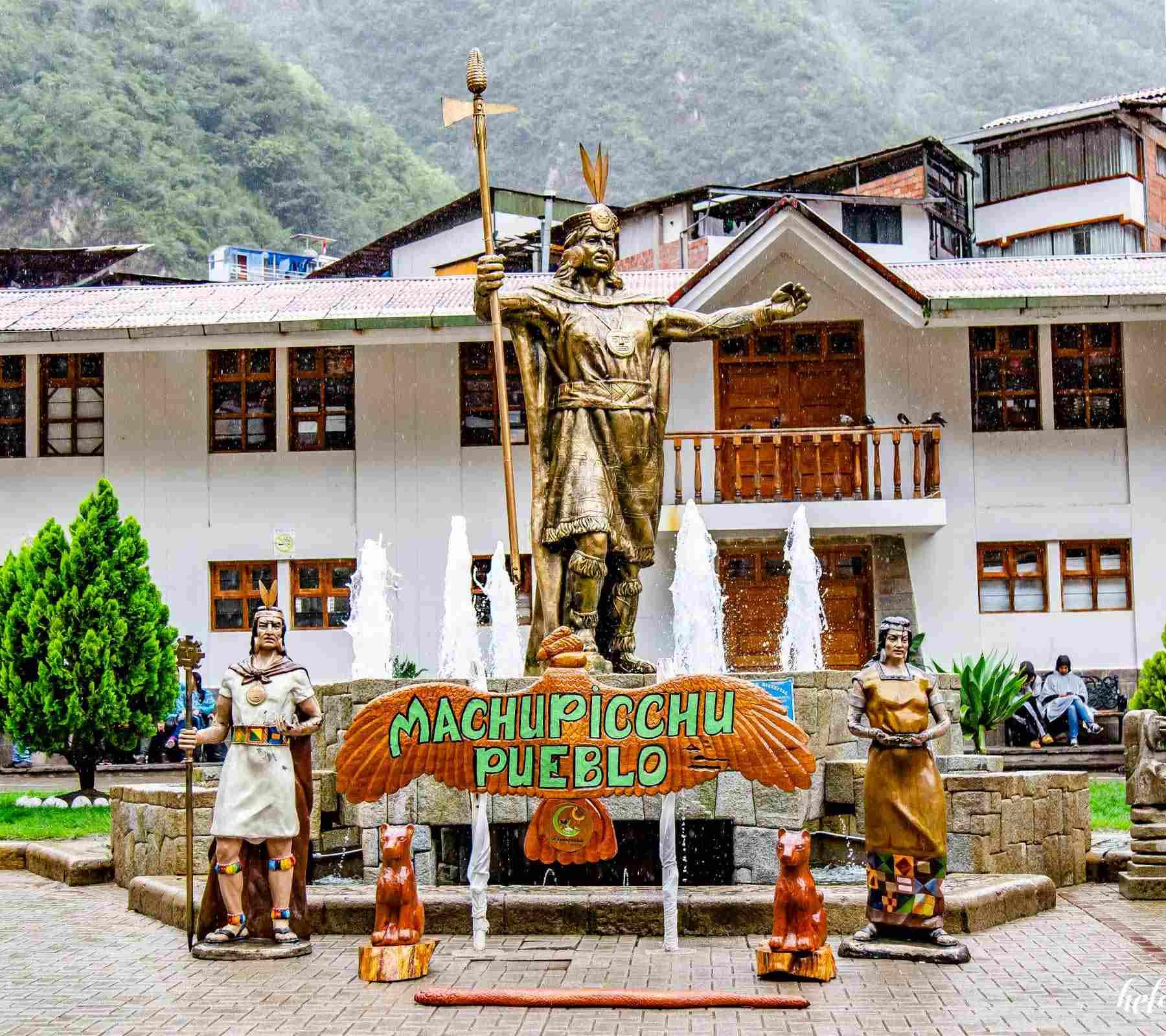
If you are planning your trip to the Inca citadel, you have likely seen two names for the same place and wondered if they are different towns. They are not; Aguas Calientes is the name by which the town is historically known, and Machu Picchu Pueblo is its official designation. That is the name you will see on train tickets and signs, while guides and locals continue to use Aguas Calientes.
In this guide you will find what is necessary to organize your time in Aguas Calientes: what it is and where it is located, how to get there by train, by road, or walking, and what to do in the town, from the hot springs to the botanical garden. You will also see how to go up to Machu Picchu, three suggested itineraries, the best time to travel, practical tips on money, luggage, and health, and the answers to the most frequently asked questions.
What is Aguas Calientes and where is it located?
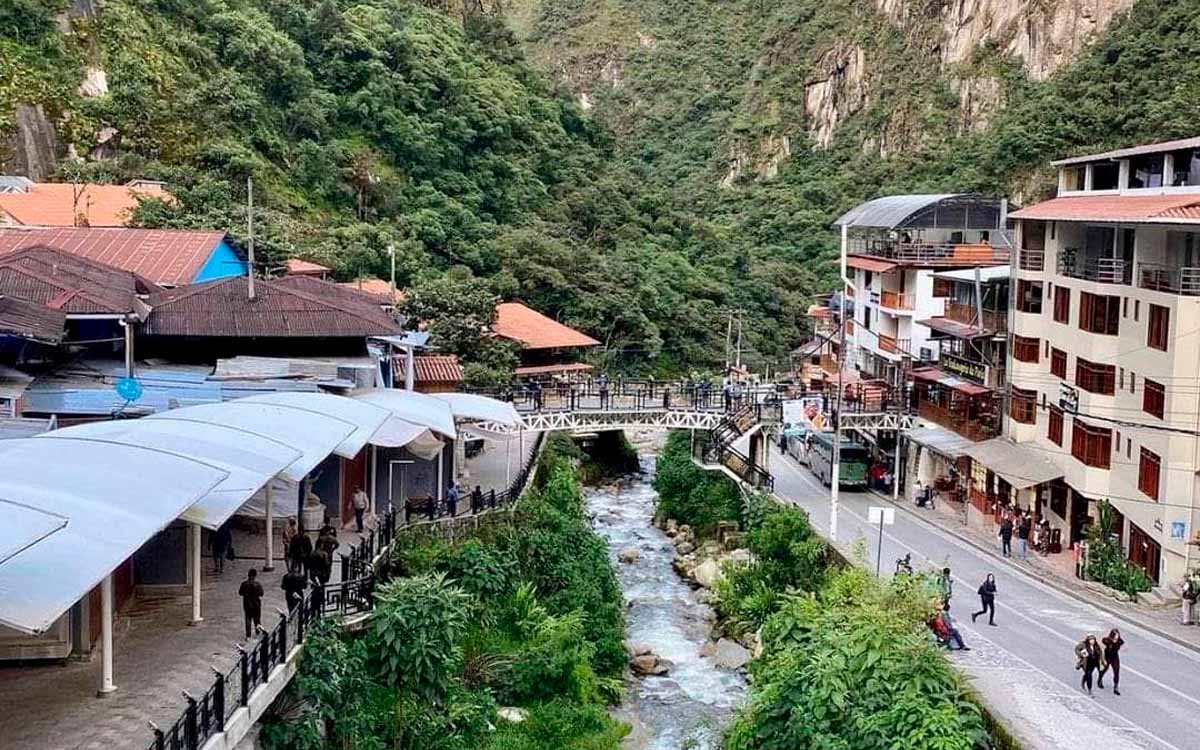
Aguas Calientes is the town that serves as a transit point to visit Machu Picchu. Likewise, it is the colloquial name by which Machu Picchu Pueblo is known, a locality on the banks of the Urubamba (Vilcanota) River, and it is the closest access point to the citadel.
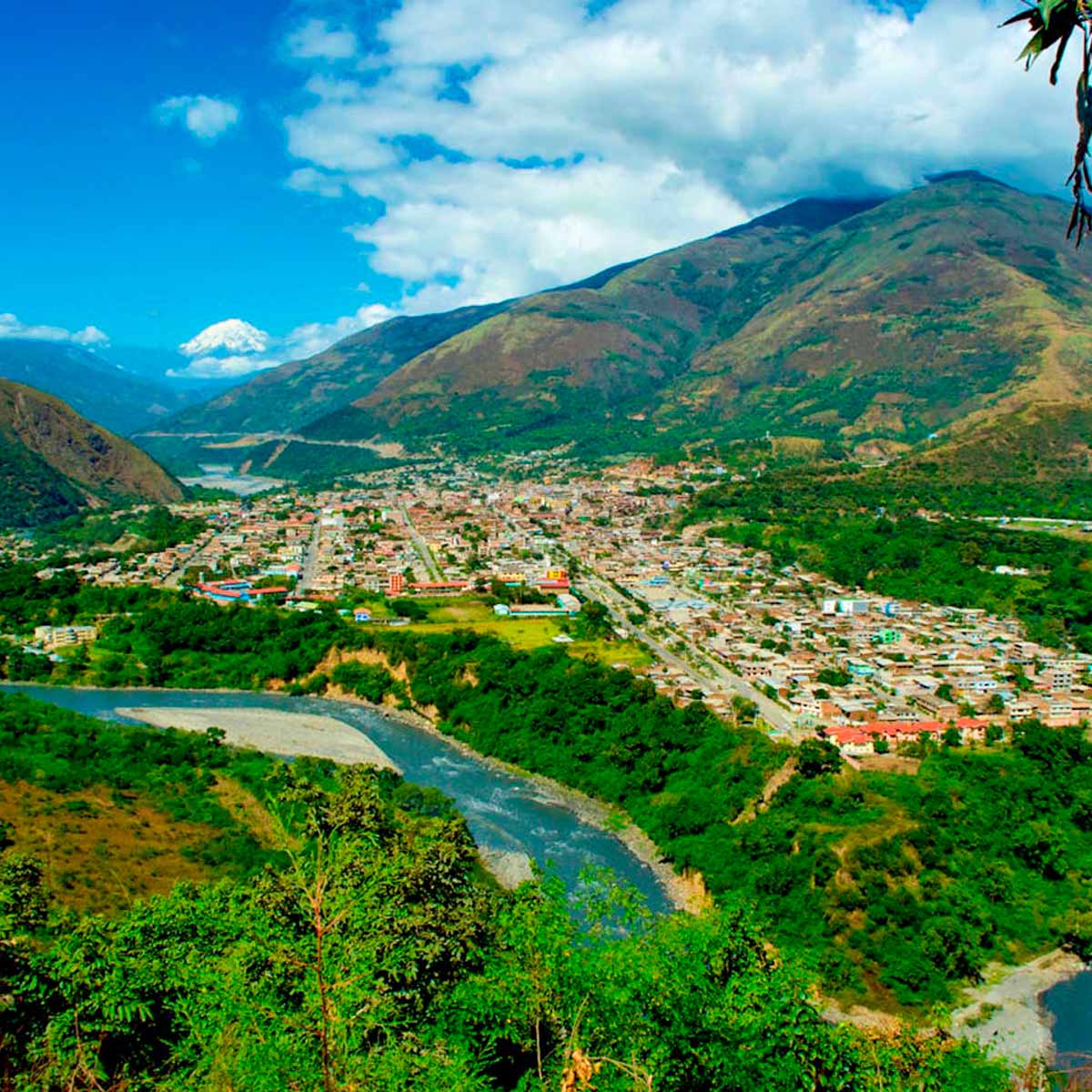
The town is located at the bottom of a narrow canyon, surrounded by jungle-covered hills. It is at the foot of the mountain that houses the Inca citadel, at the confluence of the Vilcanota, Aguas Calientes, and Alccamayu rivers. Its altitude is around 2,000 meters above sea level, much less than Cusco, so altitude sickness is hardly felt here.
Its origin is linked to the railroad. The lands were first occupied by farmers, and at the beginning of the 20th century, the place became a camp for train workers. Its history began before Hiram Bingham made Machu Picchu known in 1911. Tourism arrived later and grew strongly with visits to the citadel.
Machu Picchu Pueblo and the Machu Picchu citadel are two different places. Machu Picchu Pueblo is the modern town, with hotels, restaurants, a market, and the train station. The Inca citadel is the archaeological site, which is on top of the mountain. It is about 6 kilometers from the town and is reached by bus or on foot via the trail. The town is not part of the archaeological site, and to enter the citadel a separate ticket is needed.
How to get to Aguas Calientes?
Aguas Calientes has no road access; it can only be reached by train or on foot. Therefore, you can travel by train, which is the most used option, combine land transport with a final hike along the Hydroelectric route, or arrive on foot after several days of trekking. Each option changes in time, budget, and physical effort; thus, it is convenient to know each of the options:
Option 1: Train trip to Aguas Calientes
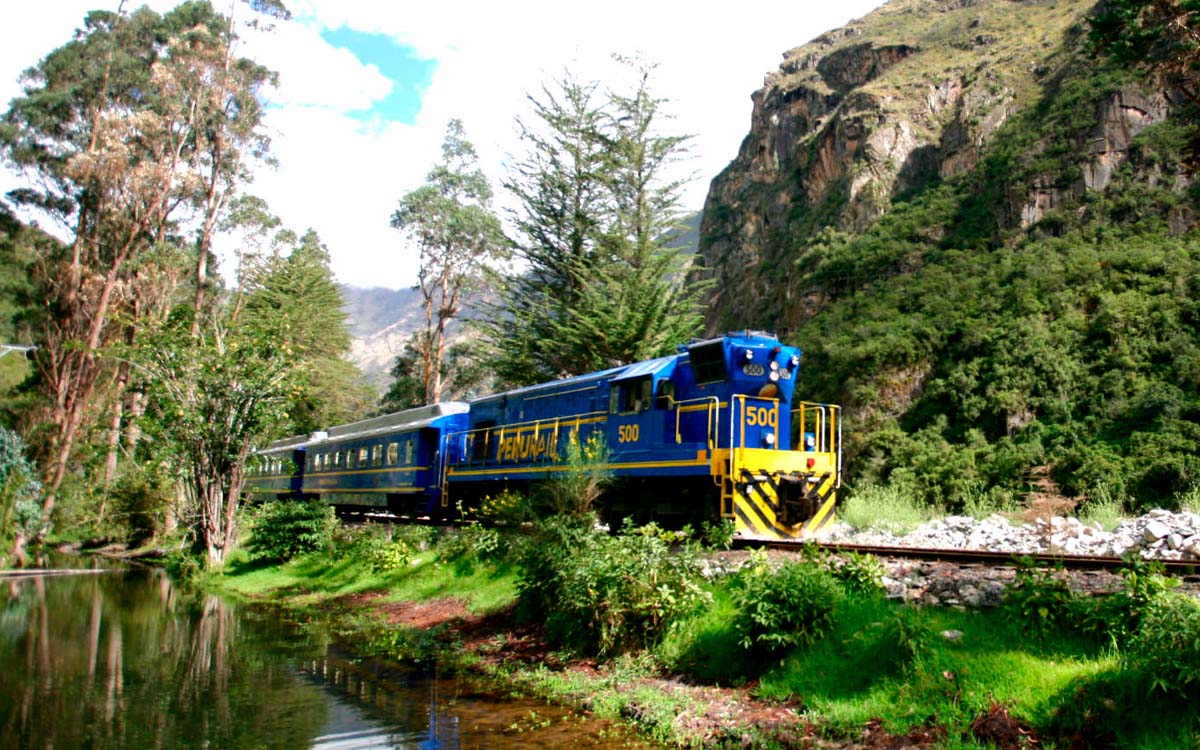
Traveling by train is one of the most comfortable and popular ways to get to Aguas Calientes. During the journey, you can enjoy impressive landscapes of the Sacred Valley, Andean mountains, and views of the Urubamba River. Currently, two companies offer this service: PeruRail and Inca Rail, with different schedules, prices, and train categories.
The most used route departs from Ollantaytambo, in the Sacred Valley, and takes approximately between 1 hour and 30 minutes. This station has numerous daily departures and is a practical option for those visiting the Sacred Valley before continuing toward Machu Picchu. It is also possible to travel from Cusco or Poroy, with journeys of approximately 3 hours to 4 hours, depending on the station and the available service. Another alternative is the bimodal service (bus + train), which combines both transports in a trip of approximately 4 to 5 hours from Cusco.
Option 2: Bus trip + route through Hydroelectric
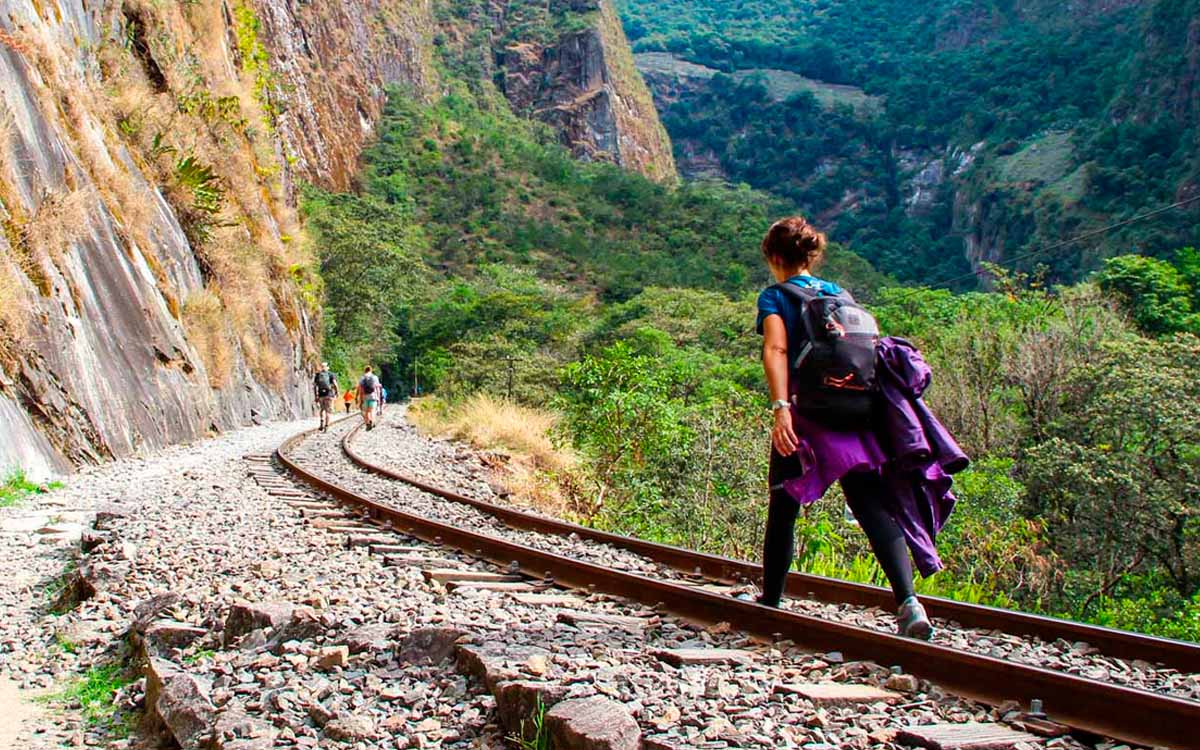
The route through Hydroelectric is one of the most economical alternatives to get to Aguas Calientes. Unlike the train, this journey combines road transport with a hike surrounded by mountains and high jungle vegetation.
The trip starts in Cusco and continues to Hydroelectric, crossing towns like Santa Maria and Santa Teresa. You can hire a direct tourist transport, which takes approximately between 6 and 7 hours, or use local transport with connections between these towns.
Once at Hydroelectric, you have two options to get to Aguas Calientes:
- Hike: A journey of approximately 10 to 11 km that takes between 2 hours and 30 minutes and 3 hours. The route follows a path next to the train tracks, with landscapes of abundant vegetation and views of the Urubamba River.
- Train: An alternative for those who prefer to avoid the hike. The trip lasts approximately 40 to 45 minutes, although it has limited schedules and requires booking the ticket in advance.
To know more details about this route, available transports, and travel recommendations, check our guide on how to get from Cusco to Machu Picchu.
Option 3: Trekking options to Machu Picchu
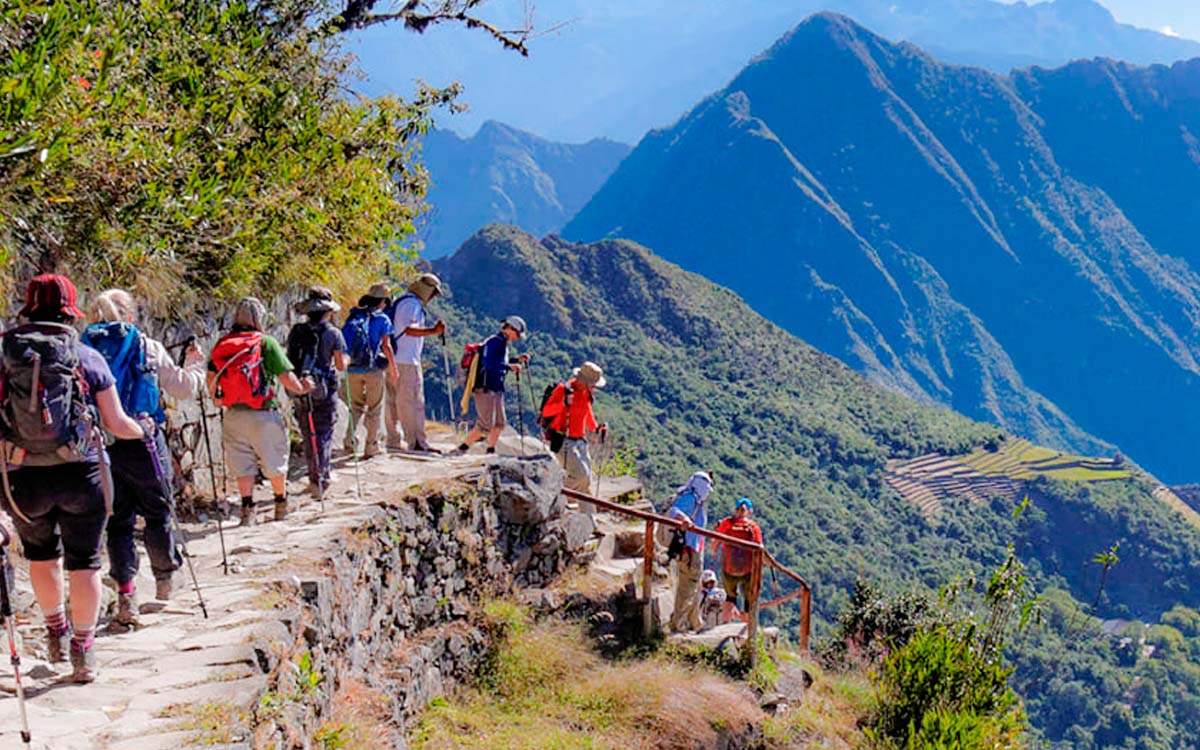
For those who are fascinated by adventure and nature, trekking routes are an excellent alternative to get to Machu Picchu. These journeys last several days and allow you to discover Andean landscapes, Andean communities, and ancient Inca constructions before reaching the destination.
Among the most popular trekking routes are:
- Inca Trail: The most famous route, with 4-day and 2-day options; to be able to do it, a special permit and advance reservation are required. Unlike other routes, this one allows you to arrive directly at Machu Picchu through Inti Punku (Sun Gate).
- Salkantay Trek: A 4 to 5-day hike, of demanding difficulty, that crosses mountains, valleys, and cloud forests. It does not require a special permit like the Inca Trail and generally arrives in Aguas Calientes before visiting Machu Picchu.
- Lares Trek: A 3 to 4-day route, of moderate to demanding difficulty due to altitude. It stands out for its Andean landscapes and visits to local communities. Generally, the journey continues by train from Ollantaytambo to Aguas Calientes.
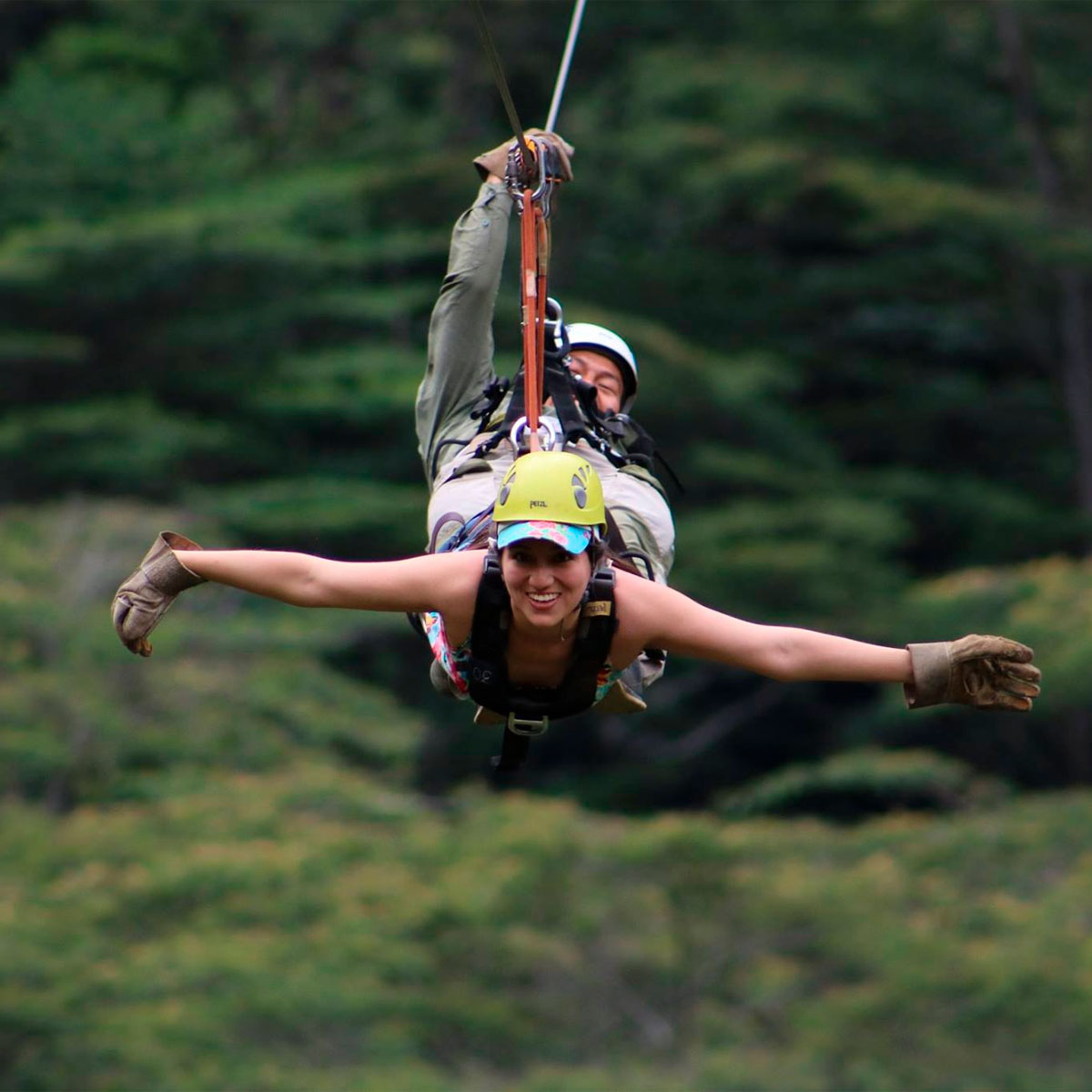
- Inca Jungle Trek: An adventure of approximately 4 days that combines hikes with activities like biking and, depending on the program, rafting or ziplining. It is an ideal option for travelers looking for a more dynamic experience before arriving in Aguas Calientes.
On routes like Salkantay and Inca Jungle, some itineraries include a hike of approximately 2 hours and 30 minutes to 3 hours from Hydroelectric to Aguas Calientes, following a path next to the train tracks.
To compare the difficulty, duration, and attractions of each journey, check our guide The 7 Best Hikes, where you will find more information about the best trekking routes in Peru.
Comparative table: How to get to Aguas Calientes
| Travel option | Approximate time | Approximate cost | Comfort / effort |
|---|---|---|---|
| Train from Ollantaytambo | 1 h 30 – 2 h | US$ 50 – US$ 100 | High / Minimum effort |
| Train or bimodal service from Cusco | 3 h 30 – 5 h 30 | US$ 60 – US$ 110 | High / Minimum effort |
| Hydroelectric route | 9 – 10 h (bus + trek) | From US$ 33 in local one-way transport, without train | Low to medium / Moderate effort |
| Inca Trail | 2 or 4 days | US$ 600 – US$ 800 | Demanding / High effort |
| Salkantay Trek | 4 – 5 days | US$ 250 – US$ 500 | Demanding / High effort |
| Lares Trek | 3 – 4 days | US$ 300 – US$ 500 | Demanding / Moderate to high effort |
| Inca Jungle Trek | 4 days | US$ 250 – US$ 400 | Adventure / Moderate effort |
What to do in Aguas Calientes
Aguas Calientes offers more than a night of transit before going up to the citadel. The town has hot springs, an artisan market, a site museum, and short trails toward gardens and waterfalls. Almost everything is done on foot and in a few hours, so it fits well into the free afternoon before Machu Picchu or the next day.

How to get from Aguas Calientes to Machu Picchu
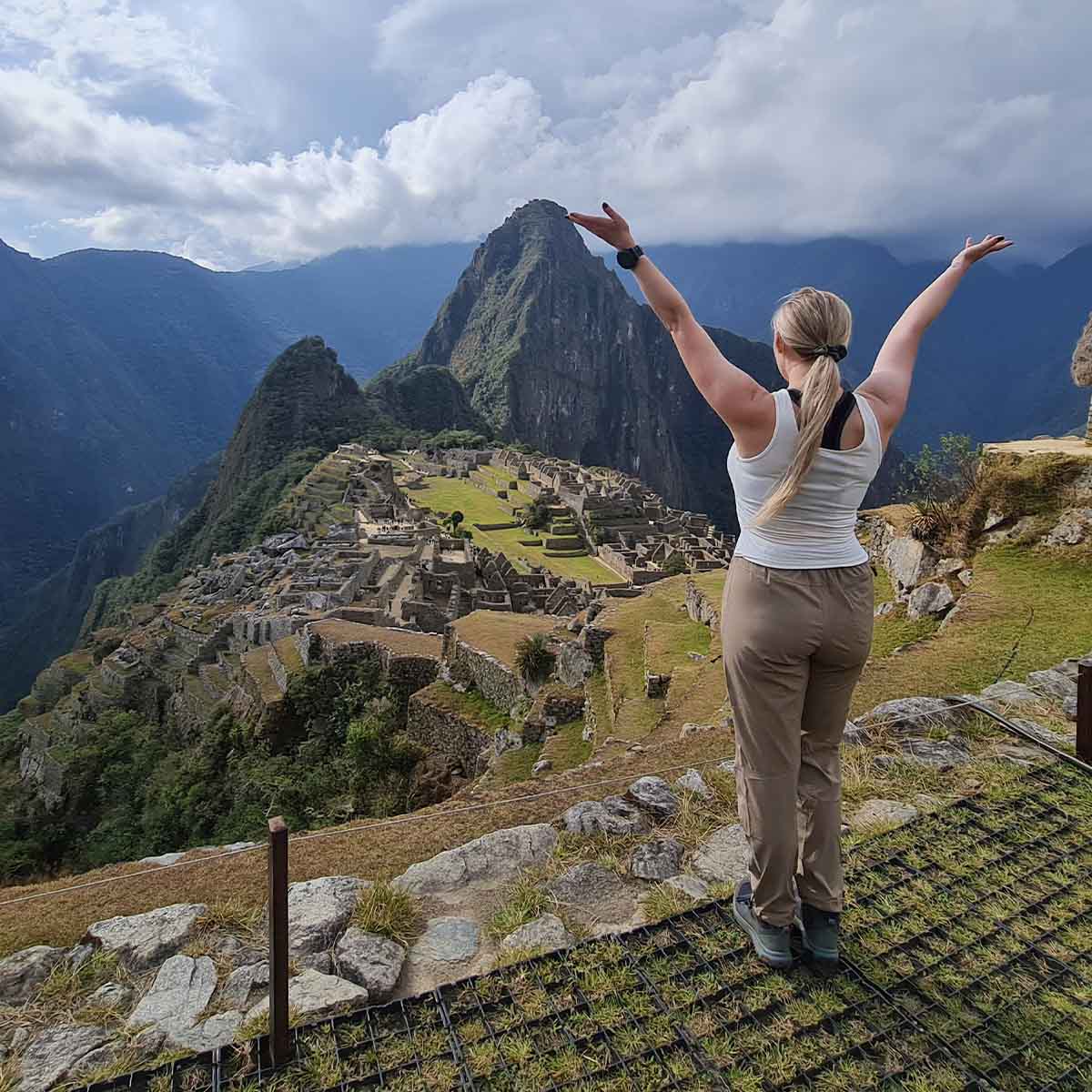
There are two ways to go up to the citadel from Aguas Calientes: by bus, which is the most used, or walking along a stone stair path. The citadel is not inside the town, so in either case it is convenient to plan the journey according to your ticket's entry time.
By bus
Traveling by bus is the fastest and most comfortable way to get from Aguas Calientes to the entrance of Machu Picchu. The journey follows the Hiram Bingham highway, surrounded by mountains and vegetation, and takes approximately 25 to 30 minutes. The first buses leave around 5:30 a.m., with frequencies of about 10 to 15 minutes, depending on demand. The upward service usually runs until 3:30 p.m., while the last return buses depart around 5:30 to 6:00 p.m.
The reference price for foreign tourists is US$ 12 per leg or US$ 24 round trip, with special rates for children. Prices and service conditions may vary, so it is recommended to check them before the trip.
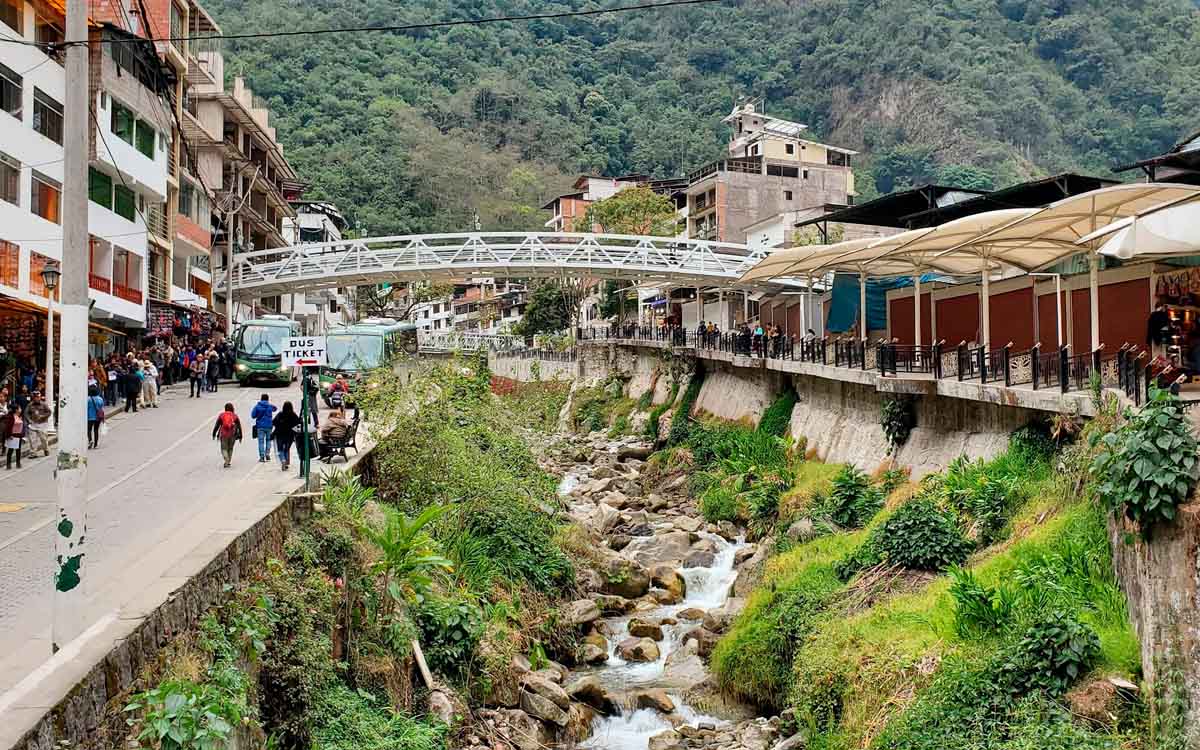
Where to buy tickets? You can acquire them at the transport ticket offices located on Hermanos Ayar Avenue, near the main bridge of Aguas Calientes. There are also online purchase options, such as the Consettur website, which allow you to avoid purchase lines on the day of the visit.
Walking along the trail
Walking from Aguas Calientes to Machu Picchu is a free alternative for travelers who enjoy hiking and want to save the bus cost. The journey crosses a natural environment and offers a more adventurous experience before entering the Inca citadel. The hike takes approximately 1 hour and 30 minutes to 2 hours, depending on the pace and physical condition. The trail includes about 3.5 km of climbing up stone staircases, with steep sections that require moderate to demanding physical effort.
To start, you must walk from the center of Aguas Calientes to Ruinas Bridge, where the trail access control is located. From there, the path ascends the mountain and crosses the Hiram Bingham highway at several points, used by tourist buses.
If you prefer to avoid the effort of the climb, you can also take the bus to Machu Picchu and make the return hike to Aguas Calientes, which generally turns out less demanding.
Tips for the first bus in the morning
- Align the bus with your ticket time. If your entry is between 6:00 and 7:00 a.m., the realistic option is to sleep in Aguas Calientes the night before. This way you can take the first buses, which leave close to 5:30.
- Arrive early at the stop. For a 6:00 to 7:00 a.m. entry, it is best to be in line well before 5:30.
- Buy the bus ticket beforehand. Avoid the line at the ticket office, although you will still have to make the line to board.
- Respect the tolerance. The ticket schedule is strict. A tolerance of 30 minutes is applied, and on some high season dates 45 minutes, and after that margin they can deny you entry.
- Bring your original passport and entry ticket. Tickets are not sold at the citadel door, and entry is single use per ticket, with no re-entry.
- Follow your ticket's circuit. Each ticket assigns a circuit and a schedule. To choose the most convenient one, review our Machu Picchu Circuits guide.
- Know current rules. The most recent changes are at: Machu Picchu New Rules.
Best time to visit Aguas Calientes
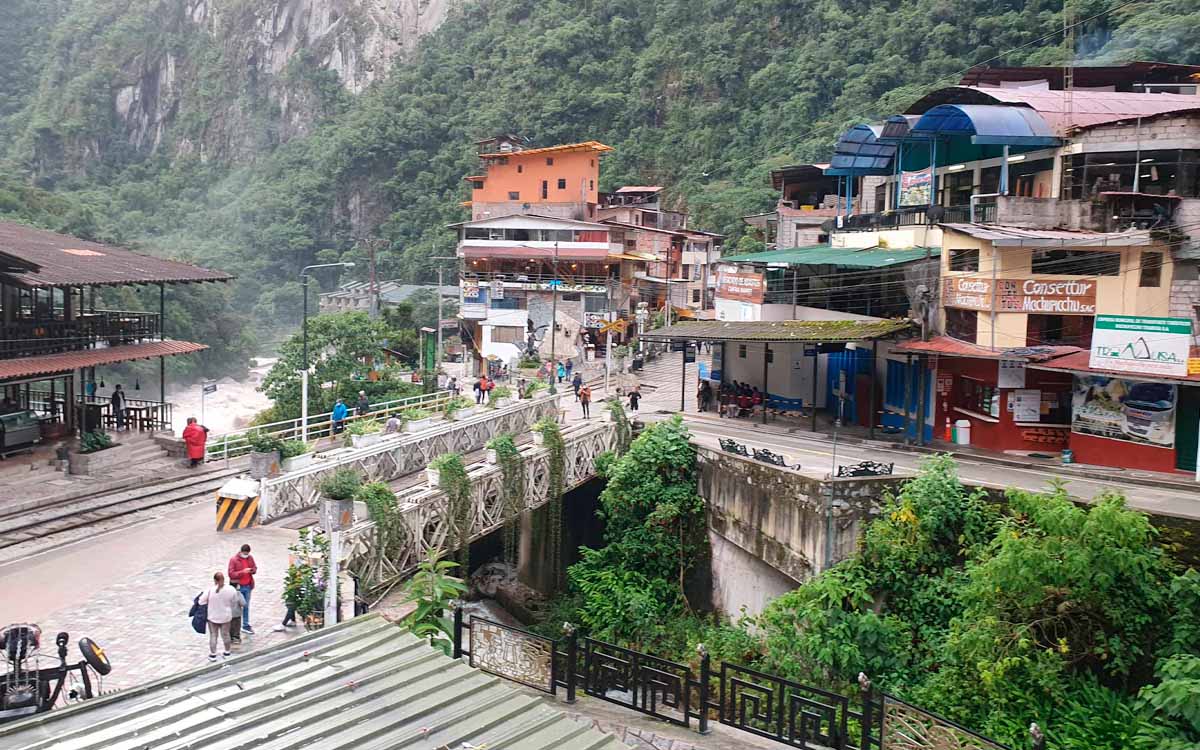
Aguas Calientes is at about 2,040 meters above sea level, quite a bit lower than Cusco, and surrounded by mountain jungle. That means a warmer and more humid climate than in the rest of the Andes, and with rain possible in any month of the year. What changes is how much and how often.
Dry season (May to September)
It is the best time for most travelers: clearer skies, trails in good condition, and less risk of delays. Mornings and nights are cool, and days are pleasant.
- Advantage: Better views and more chances for clean photos.
- Disadvantage: It is high season, especially in July and August. Hotels, trains, and tickets sell out months in advance, and prices go up.
Rainy season (November to March)
Rains are more frequent and intense, with February as the most complicated month. The town becomes greener and there are fewer people, but landslides can affect the train or roads, and fog sometimes hides the citadel for hours.
- Advantage: Fewer visitors and lower rates.
- Disadvantage: More risk of last-minute changes. It is advisable to bring a raincoat and leave a margin in the itinerary.
Intermediate months (April and October)
They are a good option if you want balance. April usually has still lush vegetation and fewer tourists. October marks the transition toward the rains, so you can find sunny days and brief showers.
Quick summary
| Season | Months | Rain | Crowds | Ideal for |
|---|---|---|---|---|
| Dry | May – Sep | Low | High | Photography and trekking |
| Intermediate | Apr and Oct | Moderate | Medium | Balance between weather and price |
| Rainy | Nov – Mar | High | Low | Tight budget and green landscapes |
Practical tips for visiting Aguas Calientes
Cash vs. card and ATMs
The currency is the Peruvian sol, and Aguas Calientes has ATMs where you can withdraw soles. Even so, it is best to arrive with some cash from Cusco or Ollantaytambo. Some points to keep in mind:
- ATM fees are usually high. Local banks charge between 18 and 36 soles per withdrawal, and the limit per operation is usually between 400 and 700 soles. Withdrawing a larger amount in a single time is cheaper than making several small withdrawals, if your limit allows it.
- Cards are not accepted everywhere. Some businesses add a surcharge for paying with a card. For small restaurants, the artisan market, thermal baths, and tips, bring cash.
- Bring small bills. 100 and 200 sol bills can be difficult to change in markets and taxis.
What to pack
The key is to separate two backpacks: the one you carry on the train and the small one with which you will enter Machu Picchu. The essentials for a visit to the town are:
- Layers of clothing: the weather in Aguas Calientes can be unpredictable
- Light raincoat, even if you travel in the dry season
- Comfortable footwear with good sole, since the citadel stones can be slippery
- Insect repellent, sunscreen, and cap
- Reusable bottle
- Cash in soles and a small flashlight or headlamp for the first bus in the morning
Allowed luggage on the train and in Machu Picchu
On the train. Each passenger can carry a single backpack or hand luggage.
- PeruRail: Up to 8 kg and no more than 115 cm adding height, length, and width.
- Inca Rail: Up to 8 kg and 118 linear cm.
- Free lockers: PeruRail offers storage without cost at the Ollantaytambo and Machu Picchu stations. If you sleep in Aguas Calientes, you can leave extra luggage there and take only what is necessary.
In Machu Picchu. Backpacks or bags larger than 40 x 35 x 20 cm are not allowed. If yours is larger, it must be left in the cloakroom or locker outside the entrance. Entering with the following is also not permitted:
- Food or kitchen utensils, umbrellas, tripods, monopods, and selfie sticks
- Heels or hard-soled footwear
- Trekking poles with metal tips: only those with rubber tips are allowed
- Drones
Non-compliance can mean immediate expulsion, without refund.
Connectivity, health, and security
Connectivity. Mobile signal and Wi-Fi can be irregular in the town and almost nonexistent inside the citadel. Download your tickets, reservations, and offline maps before leaving Cusco, and confirm with your hotel how their Wi-Fi works.
Health
- Water: It is recommended to drink bottled or filtered water to avoid stomach problems.
- Altitude: Aguas Calientes is at 2,040 meters above sea level, lower than Cusco. Many travelers feel better here, although it is good to hydrate and rest after the trip.
- Insects: Bring repellent, especially if you plan to walk along trails and waterfalls.
- Insurance: Hire travel insurance with medical coverage and consult with your doctor or a traveler clinic about vaccines before leaving.
Security. Aguas Calientes is a small, touristic town that is easy to explore on foot. Even so, apply common sense: do not leave your belongings unattended in restaurants or thermal baths, keep your passport and cash in a safe place at the hotel when you do not need them, and avoid walking alone through dark areas at night.
Frequently asked questions about Aguas Calientes
- How many days do I need in Aguas Calientes?
The ideal is to spend one night. Arriving in the afternoon, resting, and entering Machu Picchu early the next day avoids train rushes and leaves you free time in the town. If you want to add a hike to Huayna Picchu or Machu Picchu Mountain, or quietly enjoy the thermal baths and the Mandor waterfalls, a second night is convenient. - Are Aguas Calientes and Machu Picchu Pueblo the same thing?
Yes, they are the same place. The district of Aguas Calientes is also known as Machu Picchu Pueblo. The original name comes from its thermal waters (in Spanish, "aguas calientes"). It should not be confused with the Inca citadel of Machu Picchu, which is a few kilometers higher up and is reached by bus or on foot. - Can you go to Machu Picchu without sleeping in Aguas Calientes?
Yes, it can be done in a day from Cusco, but it will be a long day. There are tours that include transfers from the hotel in Cusco, round-trip train, bus to the citadel, official ticket, and guide. It is a good option if you have little time. Sleeping in the town gives you more margin to take one of the first buses, avoid delays, and not go with the pressure of the return train schedule. - Is it worth visiting the thermal baths?
Yes, especially as rest after Machu Picchu or after trekking. They are about 800 meters from the center and entry costs around 20 soles, with hours from 5 a.m. to 8 p.m. Of course, it is convenient to go with realistic expectations: there are several pools, but not all have the same temperature, and the water can look somewhat murky. Bring a swimsuit, towel, and flip-flops, and look to go at dusk or first thing in the morning, when there are fewer people. - Is Aguas Calientes expensive?
It is more expensive than other cities in the region, something usual in a tourist destination where everything arrives by train and there are almost no alternatives. You will see the difference mostly in food, drinks, and lodging, especially in the high season. To save money:- Book lodging in advance
- Prefer restaurants with a menu of the day instead of those in the main square
- Buy water and snacks before boarding the train
- Bring cash in soles for the market and thermal baths