Do you know what is the fastest and safest way to get to Machu Picchu from Cusco? There are four main routes, and the one you choose depends on your budget, the time you have available and your physical fitness level. The train option is the most used by travelers because it takes a few hours and does not require prior physical preparation, while routes like the Inca Trail or the Salkantay Trek are multi-day experiences designed for those looking for a mountain adventure.
In this guide you will find the details of each route: how long it takes, what approximate cost it has and how demanding it is, plus the step by step to take the train from Cusco, the requirements to enter the citadel and the most frequently asked questions about this route. Let's start with a quick summary of the four routes before going into the details of each one.
Quick summary
| Route | Duration | Approx. cost | Difficulty |
|---|---|---|---|
| Train (via Ollantaytambo) | 4 hours | $70 – $150 USD | Very low (Suitable for everyone) |
| Hydroelectric route | 9 – 10 hours | $30 – $40 USD | Medium (Long car ride and 3h of flat walking) |
| Inca Trail | 4 days / 3 nights | $600 – $900 USD | Medium - High (Continuous stairs and height changes) |
| Salkantay Trek | 5 days / 4 nights | $250 – $450 USD | High (Mountain pass at 4,630 meters of altitude) |
Before starting: Know the location of Machu Picchu and what arriving in Cusco is like
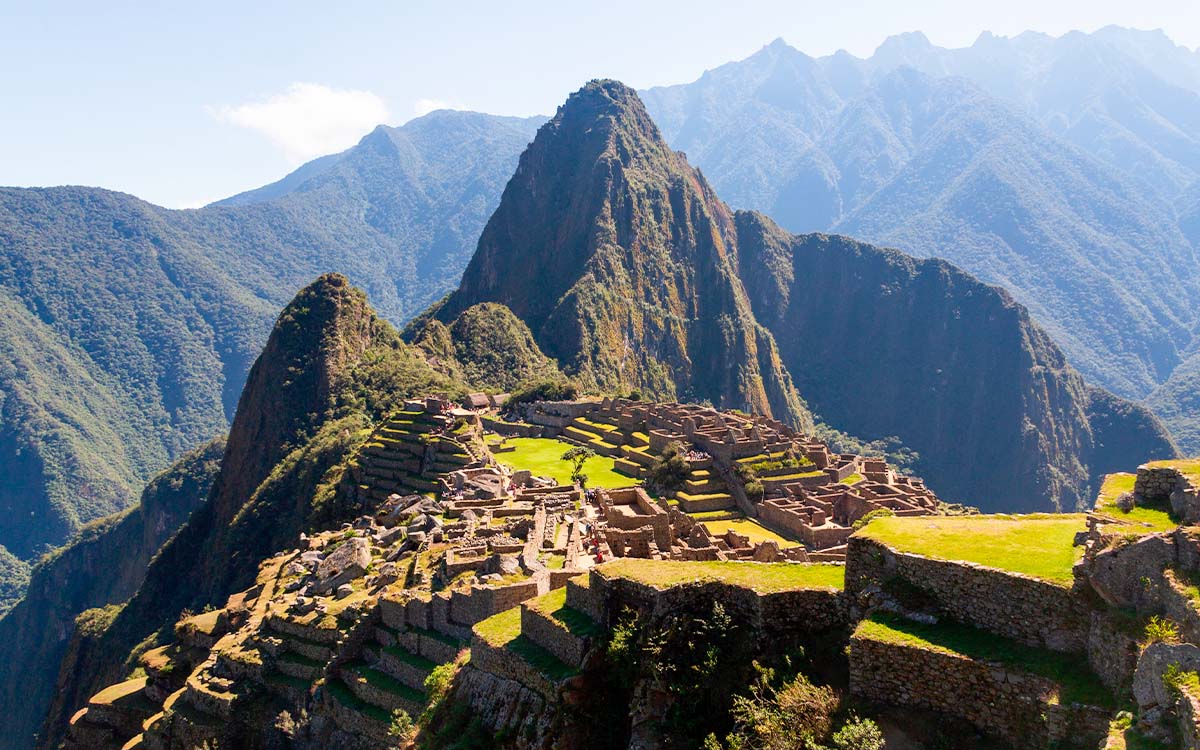
Before planning the route, it is a good idea to clear up a point that causes confusion among first-time travelers: Machu Picchu is not in the city of Cusco, but about 80 kilometers away, between the Andes mountains and the edge of the jungle. Both share the same geographical region, but getting from one to the other requires planning that starts earlier, in Lima.
Where is the citadel located?
Machu Picchu is located in the Urubamba province, Cusco region, at 2,430 meters above sea level, a lower altitude than the city of Cusco, which is close to 3,400 meters. Access to the citadel is done through the town of Aguas Calientes (also called Machu Picchu Pueblo), the closest urban point to the monument.
How to get to the city of Cusco?
There are no direct international flights to Cusco, so the starting point in the country is the Jorge Chavez International Airport, in Lima.
- Route: Domestic flight from Lima to the Alejandro Velasco Astete International Airport, in Cusco.
- Duration: About 1 hour and 15 minutes.
- Airlines: LATAM, Sky Airline and JetSMART operate this route with high daily frequency.
Once you have arrived in the city of Cusco, you proceed with your transport to your hotel (usually near the main square of Cusco), keep in mind that the airport is about 20 minutes from the Plaza de Armas.
Once settled in your hotel, spend the first day getting used to the altitude and if your body allows it, spend the time exploring the city. Later, you proceed with organizing the trip to Machu Picchu, whether by train, through the hydroelectric route or on foot through the Inca Trail or the Salkantay Trek, routes that are detailed in the next section.
The 4 ways to get to Machu Picchu from Cusco
From Cusco there are four ways to get to the citadel, each designed for a different traveler profile depending on the available time, budget and level of physical effort. Next, we will start to learn about each of the travel ways:
1. By train (the fastest option)
It is the most used alternative because it does not require physical preparation and the total trip takes about 4 hours, combining a section on the road and another on rails. It is the most recommended if you travel with family, have little time or are looking for comfort.
Step by step of the route
| Section | How to get there | Duration | Cost |
|---|---|---|---|
| Cusco → Ollantaytambo | Tourist minivan or shared taxi from Pavitos Street, Cusco | ~2 hours through the Sacred Valley | 12–15 soles ($3.50–$4 USD) |
| Ollantaytambo → Aguas Calientes | Train to Machu Picchu Town | 1 hour and 40 minutes going along the Urubamba river | From $70 USD to over $500 USD (round trip), depending on the class |
What companies run the service?
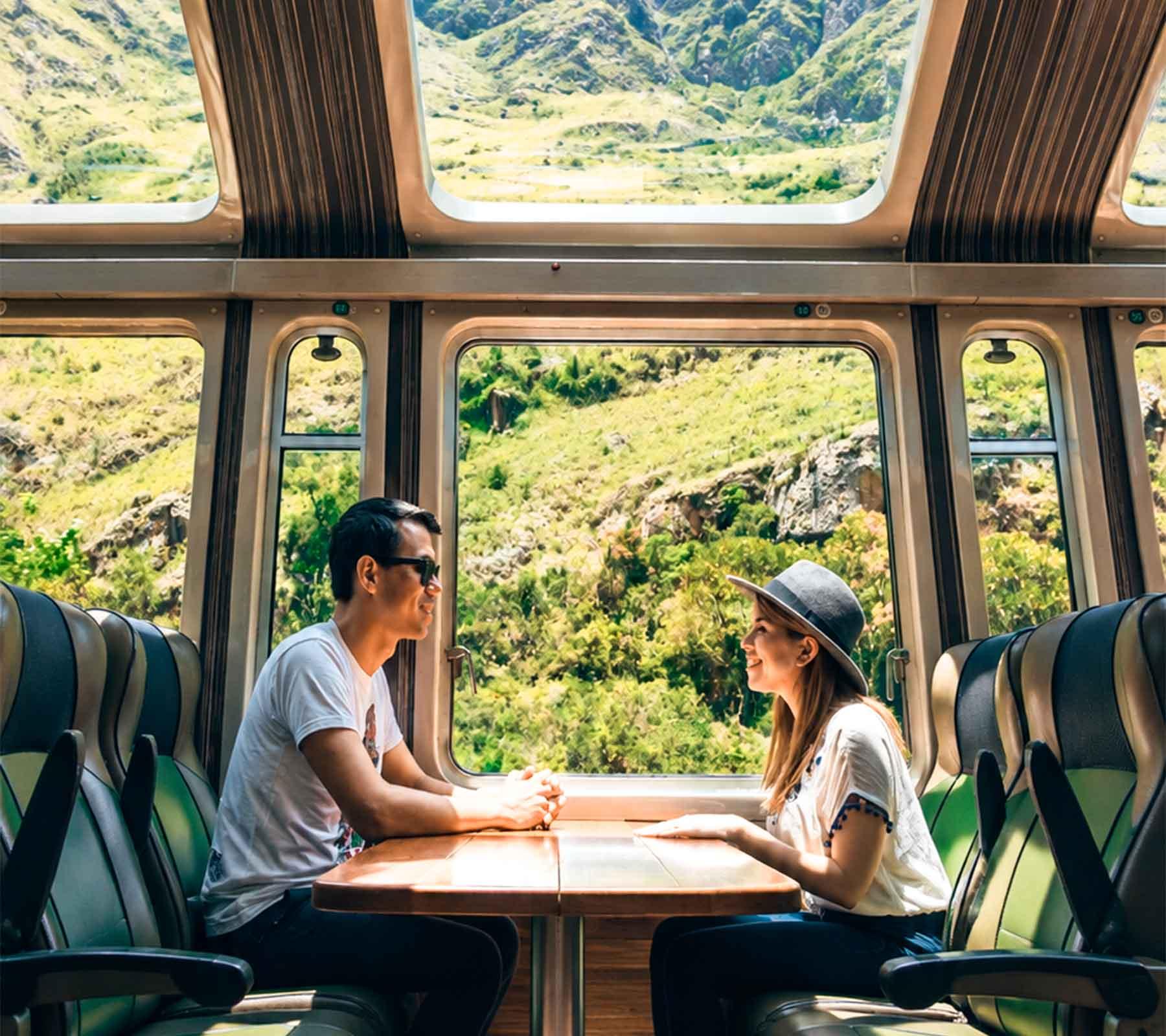
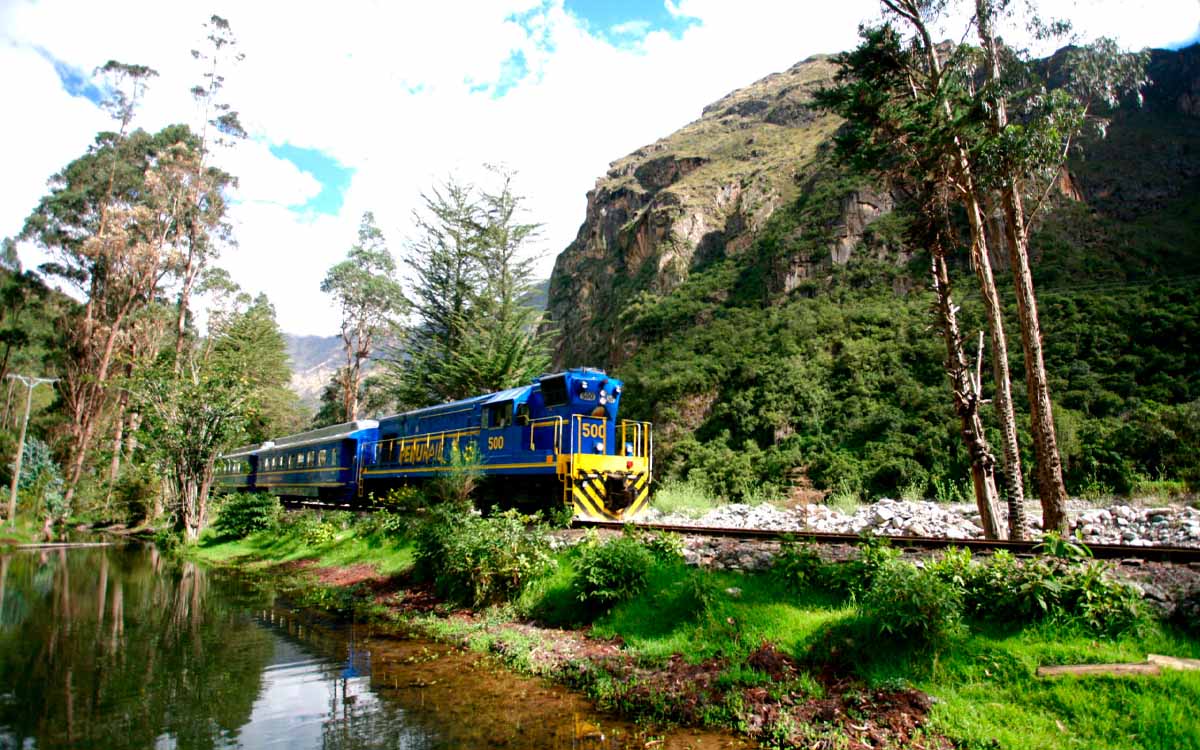
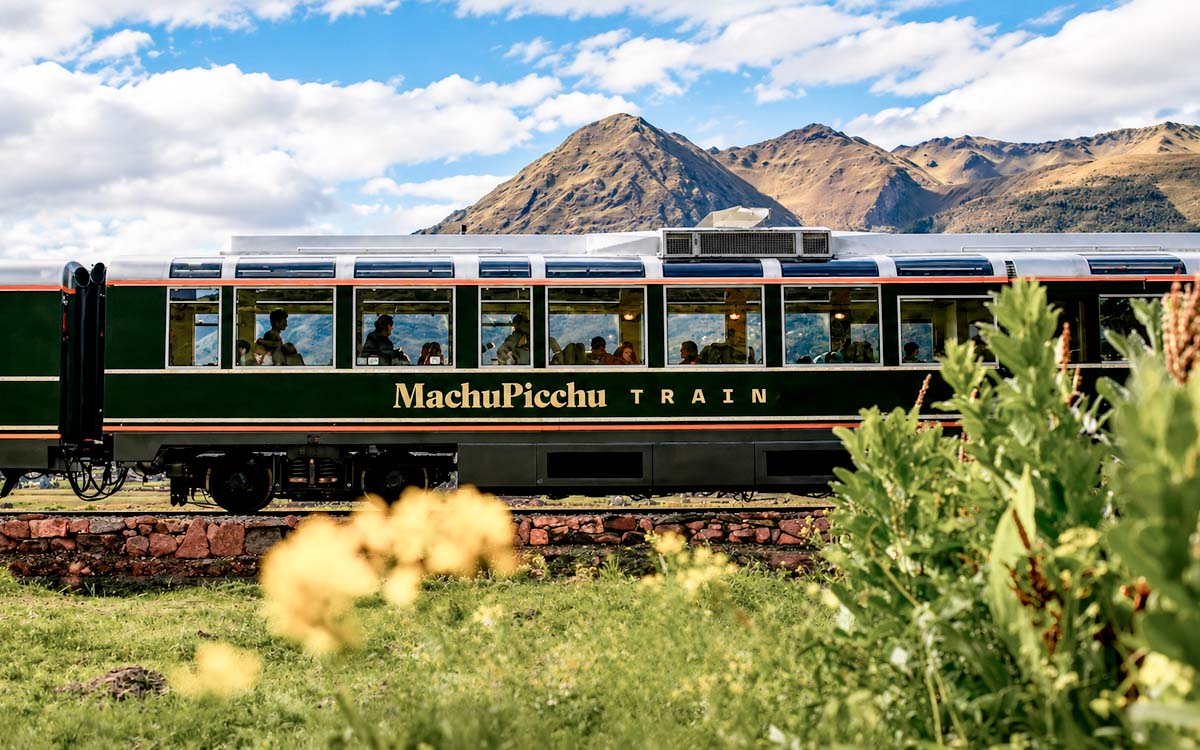
The train service is run by two private companies, both with panoramic roof cars:
- PeruRail: The oldest company. It offers the luxury Hiram Bingham train, the middle Vistadome, and the cheap Expedition. It also runs the Local Train, booked only for Peruvian citizens with ID and bought in person.
- Inca Rail: Its direct rival. It offers The 360°, The Voyager, and the luxury class The First Class services.
2. By Hidroelectrica (the cheapest route)
This option is the most used by backpackers, travelers on a tight budget, or those who prefer free walks without hiring an agency. It is the cheapest way to get there, but in exchange you give up comfort and spend a whole day on the trip: between 9 and 10 hours in total, mixing a long drive in a vehicle and a short walk.
Step by step of the route
| Section | How to get there | Duration | Cost |
|---|---|---|---|
| Cusco → Hydroelectric Plant | Tourist minivan (shared taxi) hired at agencies near the Plaza de Armas. | 6–7 hours, going up the Abra Malaga pass (+4,300 m) and going down to the edge of the jungle through Santa Maria and Santa Teresa | 60–80 soles ($16–$22 USD), round trip |
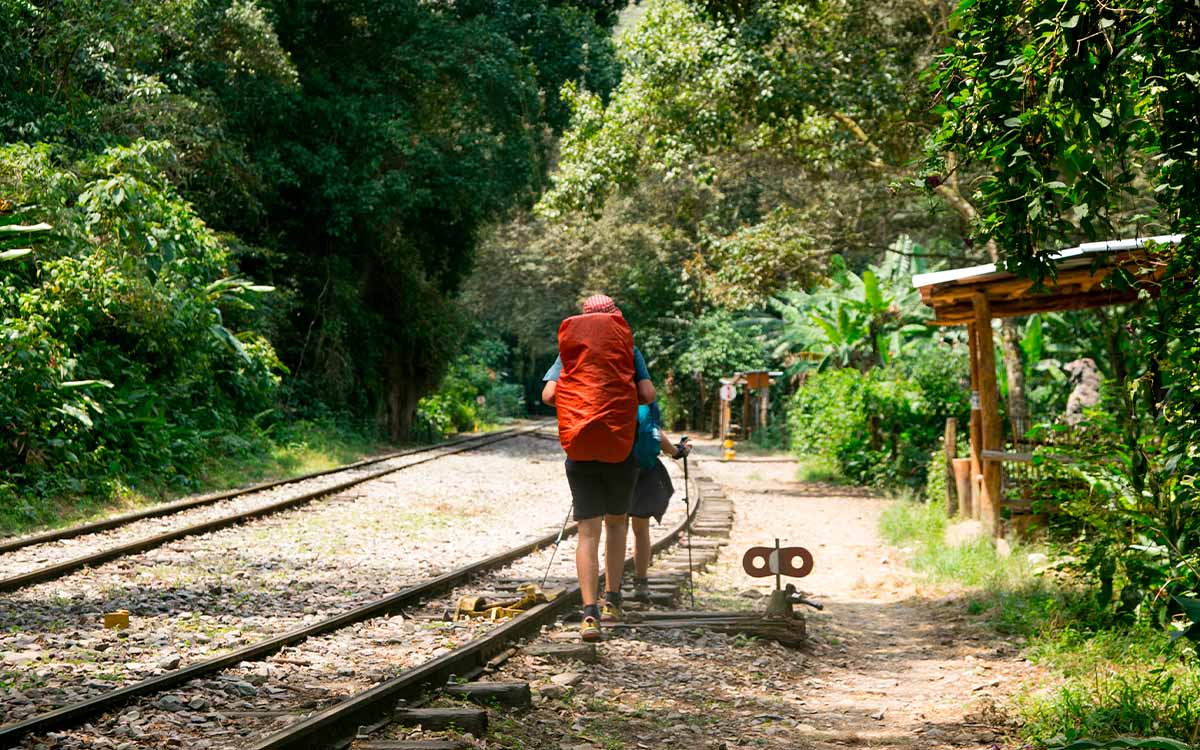
| Hydroelectric Plant → Aguas Calientes | On foot, following the path next to the train tracks and the Urubamba river | 2–3 hours (~10 km) | Free (or $35 USD to take the short 30 min section by PeruRail train) |
Advantages and disadvantages
- Advantages: It is the cheapest route, it does not depend on train tickets, and the walking part goes through a jungle landscape with lots of plants.
- Disadvantages: The minivan ride is long and the curves can cause motion sickness. It is not recommended in the rainy season (January to March) due to the risk of landslides on the road.
3. Classic Inca Trail
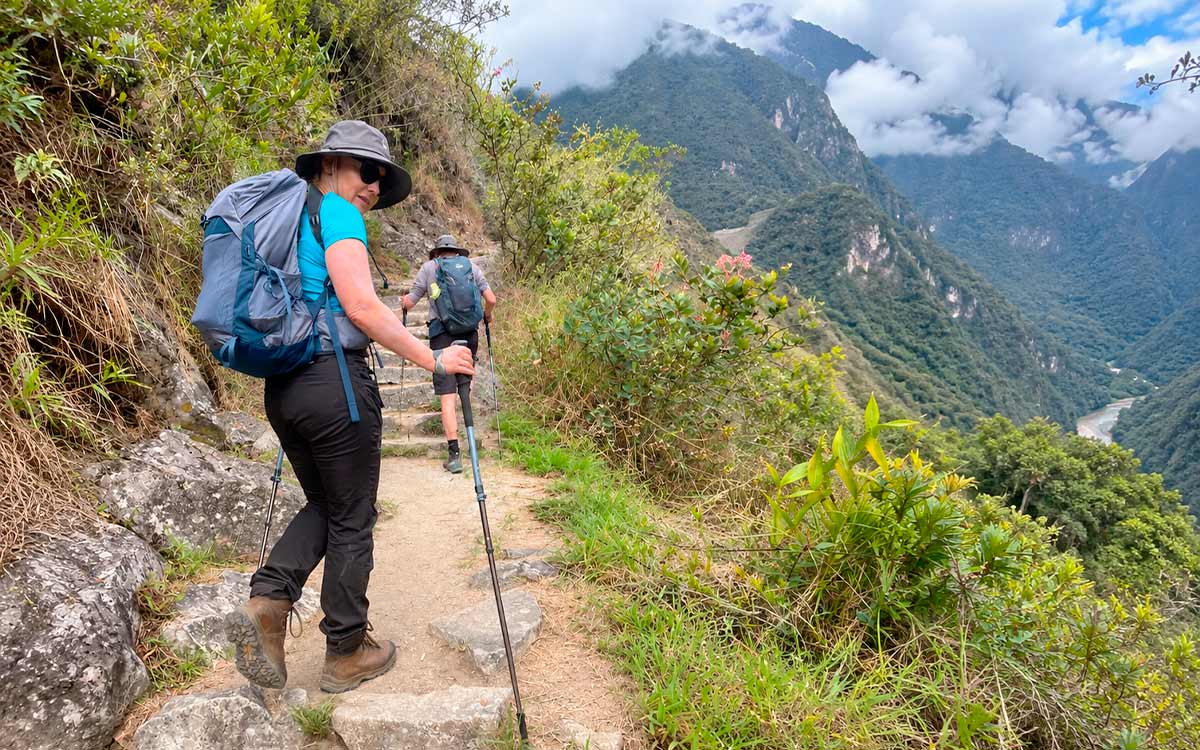
It is a 4 day trekking route that follows the historic path used by the Incas more than 500 years ago, crossing mountain passes and archaeological sites that can only be reached on foot. It is the right choice for those looking for a hiking experience with history, and the only route that ends by entering the citadel through Intipunku (the Sun Gate) instead of arriving first in Aguas Calientes.
Being a natural area protected by the Peruvian State, the planning is different from the previous routes.
Step by step of the route
| Section | How to get there | Duration | Cost |
|---|---|---|---|
| Cusco → Kilometer 82 | Transport from the authorized agency, pick up at the hotel | ~2.5 hours by road | $600–$900 USD per person (includes guide, porters, camps, meals, return train and entrance tickets) |
| Trekking (4 days / 3 nights) | Hike with camping, passing through the Warmiwañusqa pass (4,215 m) | 4 days, ~43 km, arrival at the citadel through Intipunku at sunrise on the fourth day |
Essential rules
- Limited spots: Only 500 people per day on the route (guides and porters included), which leaves about 200 daily spots for tourists. It is recommended to book 5 to 6 months in advance.
- Yearly closure: The Inca Trail closes all of February for maintenance and because it is the rainiest month.
- Only with an agency: It cannot be traveled on your own; the rules require hiring an authorized agency with an official guide.
Difficulty level: medium-high
The main challenge is not the distance (~43 km), but the stone stairs, which demand constant effort on the knees, added to the altitude. It is recommended to spend at least 2 days getting used to the altitude in Cusco before starting.
4. Salkantay Trekking
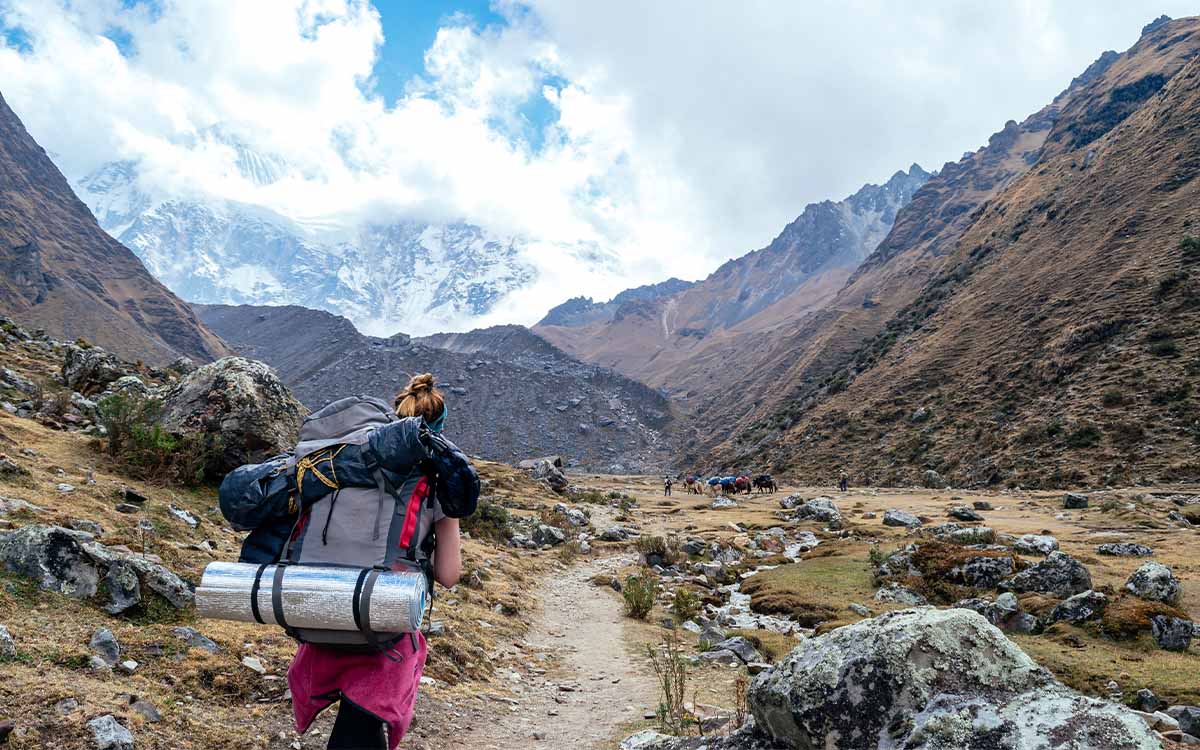
It is the alternative to the Inca Trail, and the preferred route for those looking for high mountains, varied landscapes, and photography. It was recognized by National Geographic as one of the best treks in the world. Its main feature is the contrast of landscapes, going from walking next to a snowy mountain to being in the middle of a tropical jungle in a matter of hours. Unlike the Inca Trail, it does not use old paved stone paths, but dirt trails that cross the Vilcabamba mountain range.
Step by step of the route
| Section | How to get there | Duration | Cost |
|---|---|---|---|
| Cusco → Mollepata / Challacancha | Agency transport, early morning pick up at the hotel, to Mollepata and then Challacancha, where muleteers wait with horses for luggage | ~3 hours by road | $250–$450 USD per person with an agency |
| Trekking to Aguas Calientes | Hike that goes up to the Salkantay Pass (4,630 m), near the glacier, goes down towards the edge of the jungle (Chaullay, Santa Teresa) and connects with the Hydroelectric Plant tracks for the last 10 km | 4–5 days |
The cost is lower than the Inca Trail because it does not require the same government permits and horses are used instead of porters.
Attractions on the way
- Humantay Lake: Lagoon with turquoise waters fed by the melting ice of the Humantay snowy mountain, visited on the first day.
- Cocalmayo Hot Springs: Thermal baths in Santa Teresa, usually visited on the third day.
Difficulty level: high
It is the hardest route to Machu Picchu because of the altitude, the first camp night is at almost 3,900 meters and the mountain pass is the highest of the four routes. It requires getting well used to the altitude beforehand and technical clothing for below zero temperatures during the night.
How to take the train to Machu Picchu: The step by step
If you travel with the bimodal service (bus + train on a single ticket), this is the operational route from Cusco to the entrance of the citadel.
- Starting point in Cusco: The meeting point depends on the company you booked with:
> PeruRail: Wanchaq Station, at the end of Av. El Sol.
> Inca Rail: Waiting Room and Bimodal Ticket Office, Av. El Sol N° 843.
Show up 30 minutes before departure with your physical identity document and your printed or digital ticket. - Section 1: Bimodal bus (Cusco → Ollantaytambo): After luggage control, you board a tourist bus from the train company. The trip takes 2 hours through the Sacred Valley, with air conditioning and luggage space, and ends at the door of the Ollantaytambo Station.
- Transfer in Ollantaytambo: The company staff guides passengers to the boarding room matching the type of booked train (Expedition, Vistadome, 360°, etc.). The wait between the bus arrival and the train departure is usually 15 to 25 minutes.
- Section 2: Train (Ollantaytambo → Aguas Calientes): The train section lasts 1 hour and 40 minutes, going along the Urubamba river as the landscape changes from an Andean valley to the edge of the jungle. The train ends at the Aguas Calientes Station (Machu Picchu Town).
- Final section (Consettur bus to the citadel): From the train station, you walk a couple of minutes to the Consettur bus stop, crossing the craft market.
| Step | Detail |
|---|---|
| Buying the ticket | Online on the official Consettur website, or at the physical ticket office on Av. Hermanos Ayar. $24 USD round trip for foreign adults. |
| Boarding | No numbered seats or fixed time; you get on in order of arrival. A bus leaves every 5–10 minutes. |
| Going up | 25–30 minutes on the Hiram Bingham road up to the Machu Picchu entrance door. |
What do you need to enter the citadel?
To cross the entry control to Machu Picchu you must follow the rules set by the Ministry of Culture. These are the three essential items you must bring:
Original identity document (physical)
The entrance ticket is linked to your identity, so at the door you must show:
- Foreigners: Valid original passport.
- Citizens of the Andean Community or Mercosur: Original physical identity card or ID.
- Students: Valid physical university card, if you got the discounted price.
Copies, photos of the document on the phone, or loss reports are not accepted.
Official entrance ticket
You must carry the ticket previously bought on the official government platform. Some important points:
- Each ticket has a date, an exact entry time, and a specific circuit that limits the areas you can visit.
- The entry leeway regarding the set time is only a few minutes.
- Since May 2026, regular purchases automatically include an extra conservation fee by SERNANP: S/11 for foreigners and S/5 for Peruvians.
Bus ticket (Consettur) or walking up
To get to the door of the citadel from Aguas Calientes you need to show your bus ticket (operated only by Consettur), or you can walk up the stepped path for free, timing it well so you do not miss your entry time.
Is a tour guide mandatory?
According to the Rules of Sustainable Use and Tourist Visit:
- Regular use: Every visitor must tour the circuits joined by an official tour guide, in groups of up to 10 people.
- Exception: If your ticket includes high mountain routes (Huayna Picchu or Machu Picchu Mountain), the guide is not mandatory for those specific sections.
- Second consecutive visit: If you enter the next day, you do not need to hire a new guide, as long as you show the ticket from the previous day and name the guide who joined you the first time.
At the entrance and in Aguas Calientes you will also find certified guides who offer their services independently, in a shared or private group.
Frequently asked questions
- Can you go to Machu Picchu and back in one day from Cusco?
Yes, it is possible if you travel by train. The full trip (bus to Ollantaytambo, train to Aguas Calientes, bus to the citadel) takes a few hours per section, which allows you to plan a round trip on the same day. It is not possible with the hydroelectric route, the Inca Trail, or the Salkantay Trek, since these routes require several hours or full days just for the access trip. - Is there a local train for tourists?
No. The Local Train operated by PeruRail is a service reserved only for Peruvian citizens with an ID card, bought in person. Foreign tourists must use the tourist services of PeruRail or Inca Rail detailed above. - How hard is the altitude on this route?
It depends on the chosen way. The city of Cusco is at almost 3,400 meters, while Machu Picchu is lower, at 2,430 meters, so the final section is not an altitude challenge. The challenge is in the trekking routes:
> The Inca Trail crosses the Warmiwañusqa pass at 4,215 meters.
> The Salkantay Trek reaches up to 4,630 meters at the Salkantay Pass, with camp nights near 3,900 meters.
At least 2 days of getting used to the altitude in Cusco are recommended before starting either of these two routes. - How far in advance should I book?
It changes depending on the route:- Inca Trail: 5 to 6 months in advance, due to the limited spots of 500 people a day (about 200 spots for tourists).
- Salkantay Trek: It does not have the same limit of spots, but it is recommended to book a few weeks in advance, especially in high season.
- Train (Ollantaytambo–Aguas Calientes): It is a good idea to buy the ticket weeks in advance in high season, since the cheapest classes sell out first.
- Machu Picchu entrance ticket: Must be booked in advance by circuit and time, since daily spots are also limited.