Have you thought about which place in the Sacred Valley is best to start your tour? Pisac is one of the most visited stops in this region and, for many travelers, the first one they find when leaving Cusco. There, an Andean town, a very famous artisan market, and an Inca archaeological site that extends over the mountain, with terraces and wide views of the valley, come together.
Since it is a destination with several attractions in the same place, it is normal to have doubts before going. How much time do you need to explore it calmly? Knowing what to see, in what order, and how to get there helps to make the most of the visit, avoid setbacks, and decide whether it is better to do it on your own or as part of a tour, especially if Pisac is part of a day route through the Sacred Valley.
In this guide, you will find everything about Pisac: we will look at its history, where it is located and how to get there, and what you can see in each place. We also include practical information to plan the visit, options to combine it with other nearby destinations, and answers to the most frequently asked questions.
About the Sacred Valley of the Incas
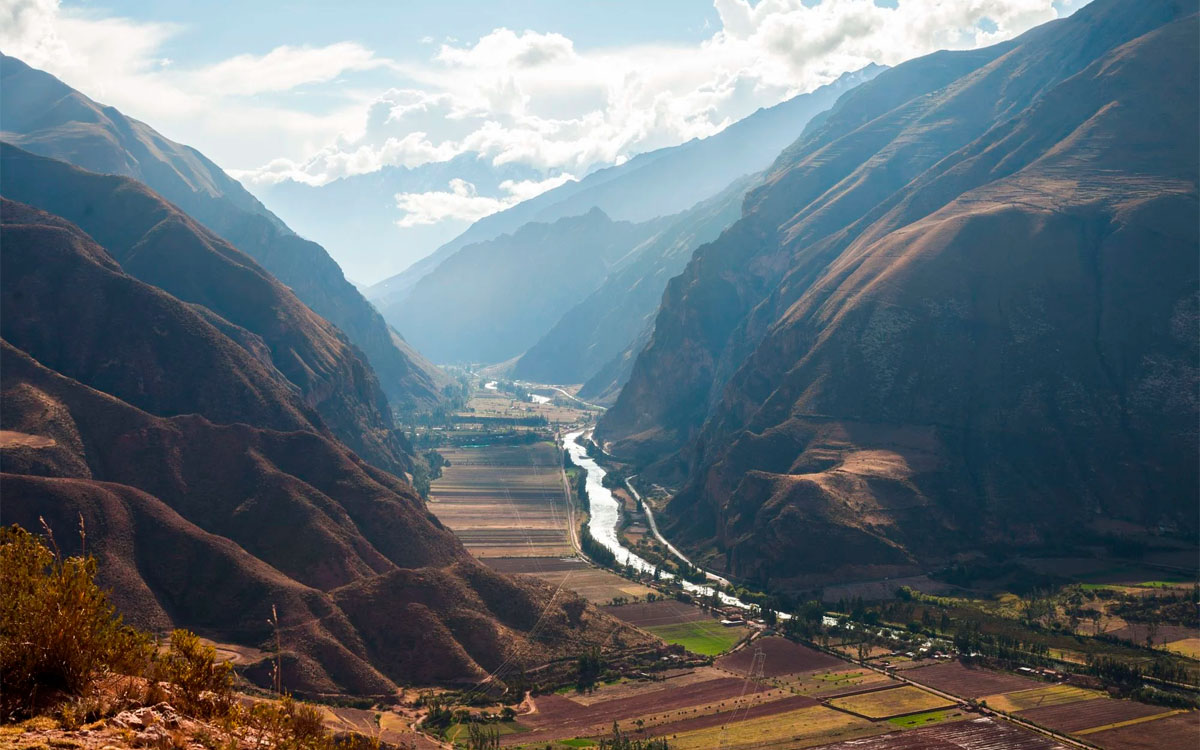
The Sacred Valley of the Incas is a fertile strip in the Cusco region that extends alongside the Vilcanota-Urubamba River, north of the city of Cusco. Its milder climate than that of the high areas and the richness of its lands make it one of the most productive landscapes in the Andes. In it, you can find traditional towns, agricultural terraces, and some of the most visited archaeological sites in the country.
For the Incas, this valley was a territory of enormous value. Its lands allowed the cultivation of products such as corn, which had a central role in food and ceremonies. In addition, administrative, agricultural, and religious centers were settled here, and the area functioned as a corridor to other regions, including Machu Picchu. That is why today the valley is a point of importance for those who want to understand how the Incas lived and organized themselves beyond Cusco.
What is Pisac? Getting to know one of the best sites in the Sacred Valley
Pisac is a destination that brings together two attractions in the same place: an Andean town and an Inca archaeological site that dominates the valley from the heights. That is why many travelers consider it one of the most complete experiences in the Sacred Valley, as it allows combining culture, history, and landscape in a single visit.
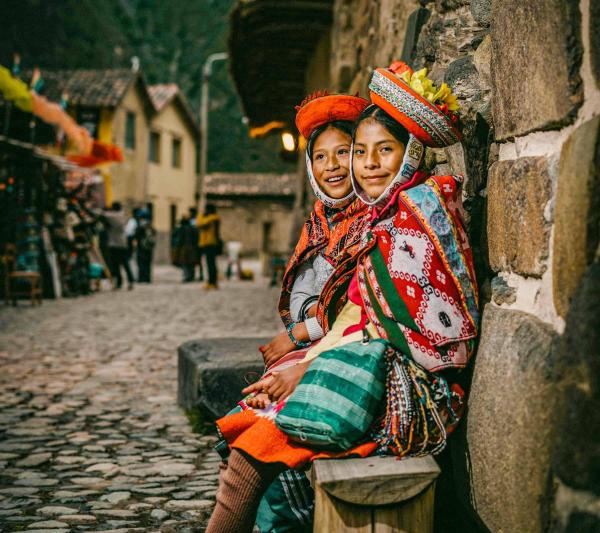
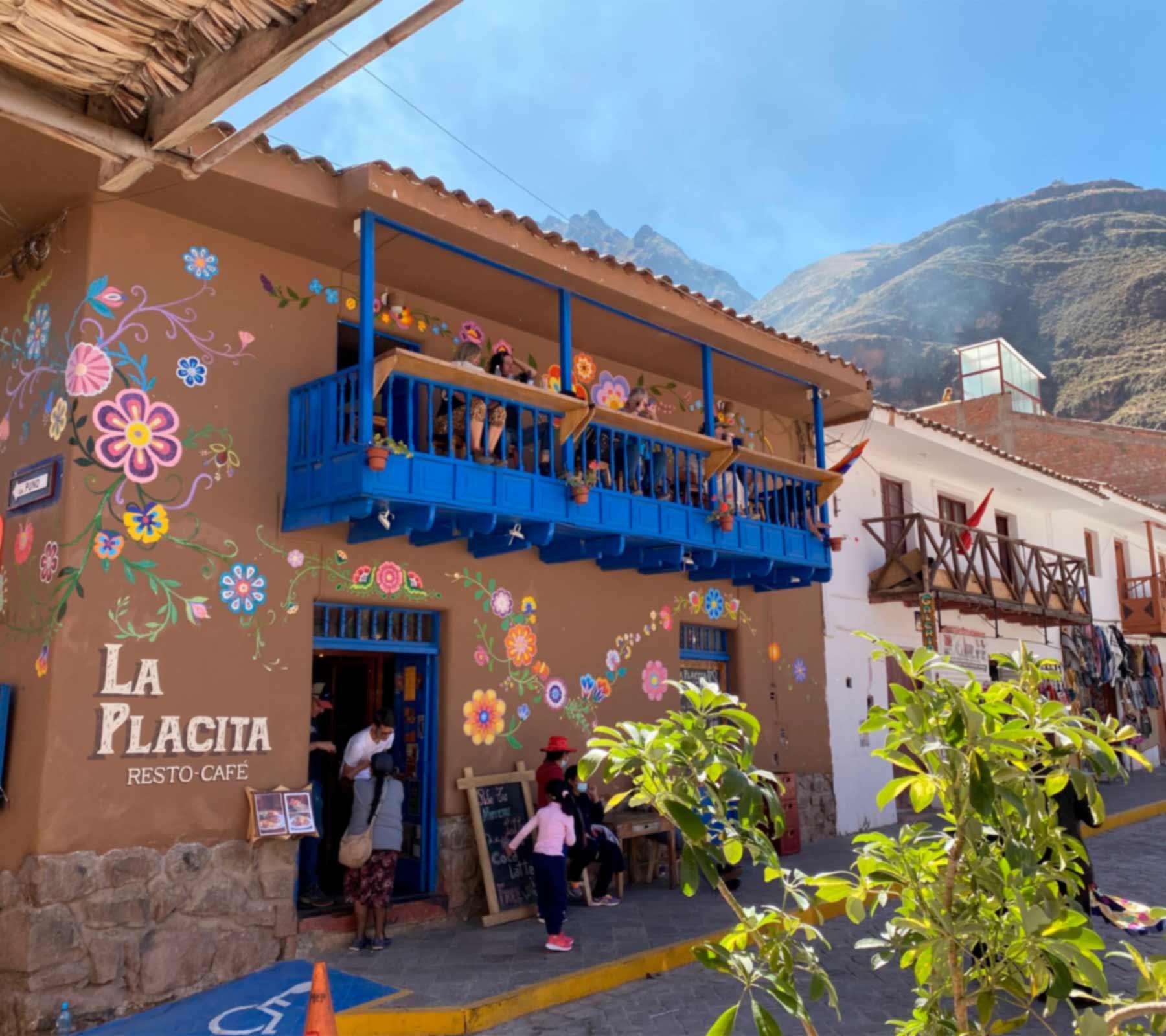
The town preserves a very marked local atmosphere. Its main square is the center of activity and, around it, the artisan market unfolds, one of the most famous in the region, where hand-made textiles, ceramics, and souvenirs are found. It is a good place to walk without rushing, try local food, and get to know the daily rhythm of its inhabitants.
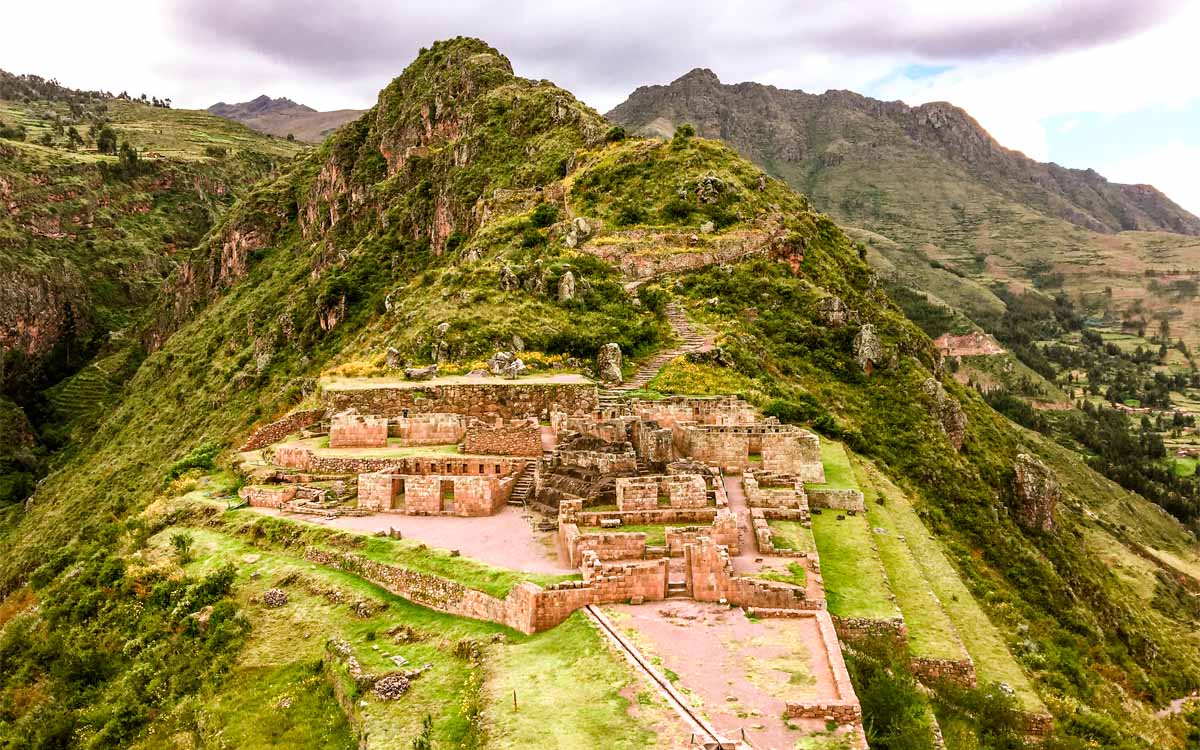
The archaeological site is on the mountain, above the town, and gathers terraces, channels, paths, gates, cemeteries, and other ruins. There, you can clearly see the agricultural terraces that run along the slopes, in addition to different sectors that fulfilled their own functions. Later in this guide, we will tell you in detail what to see in each place.
About the History of Pisac
Today it is considered that Pisac was a royal estate built by the Inca Pachacutec, no earlier than 1440, as a residence, citadel, observatory, and religious site, and that it could also serve as a refuge in times of conflict.
Its location was not accidental. Many scholars believe that Pachacutec conceived it as a retreat away from Cusco, where he and the nobility could rest between military campaigns and perform rituals, as well as support his family and descendants.
Where is Pisac and how to get there?
The town of Pisac is located in the district of Pisac, province of Calca, at the southern end of the Sacred Valley, at 2,972 meters above sea level and about 32 kilometers northeast of Cusco. The archaeological complex is located higher up, at about 3,300 meters in altitude, so it is advisable to take the difference in altitude into account when planning the visit.
From Cusco, the trip takes about an hour. These are the most common options:
- Bus or collective van: It is the most economical option. The collective vans and combis leave from Puputi street in Cusco and take between 45 minutes and 1 hour. They leave when they are full, so waiting times vary.
- Taxi: It is more comfortable and faster, and it works if you travel in a group or want to go directly up to the archaeological site. It is advisable to agree on the price and waiting time before leaving.
- Tour: It is the most practical alternative if you prefer not to organize transport, as it usually combines Pisac with other places in the Sacred Valley on the same day.
If you want to compare more routes and transport options in the region, you can check our guide How to Get from Cusco to Machu Picchu?.
What can you see in Pisac?
Pisac allows you to put together a half-day or full-day visit, depending on the pace of each traveler. The three main attractions are the archaeological park in the heights, the artisan market, and the town with its main square, its church, and its clay ovens. Each offers something different, and the ideal is to combine them to learn about both the Inca legacy and current life in the valley.
Archaeological Park of Pisac
The Archaeological Park of Pisac extends over a mountain ridge and brings together a group of Inca constructions that reflect the agricultural, religious, residential, and defensive planning of this ancient archaeological site. Its main sectors are Pisaqa, Intihuatana, Q’allaqasa, and Kinchiracay, distributed throughout the complex.
Among its most outstanding elements are the extensive agricultural terraces, the ceremonial enclosures, and the constructions that dominate the valley. Below, we will get to know each of them in more detail:
- Terraces (agricultural terraces): The terraces are the first impressive image of the park. The slopes are covered with Inca terraces, which were built by manually carrying more fertile soil from the lower areas, allowing the production of surplus food at high altitude.
- Intihuatana sector and Temple of the Sun: It is the religious sector of the complex. It includes the Temple of the Sun, baths, altars, water fountains, a ceremonial platform, and an intihuatana.
- Other sectors and the burial area: Beyond the Intihuatana, the route includes other groups such as the residences of: Q’allaqasa, Pisaqa, and Kinchiracay. On the opposite slope of the river lies the Tanqanamarka cemetery, which is considered perhaps the largest Inca cemetery in South America.
Artisan market
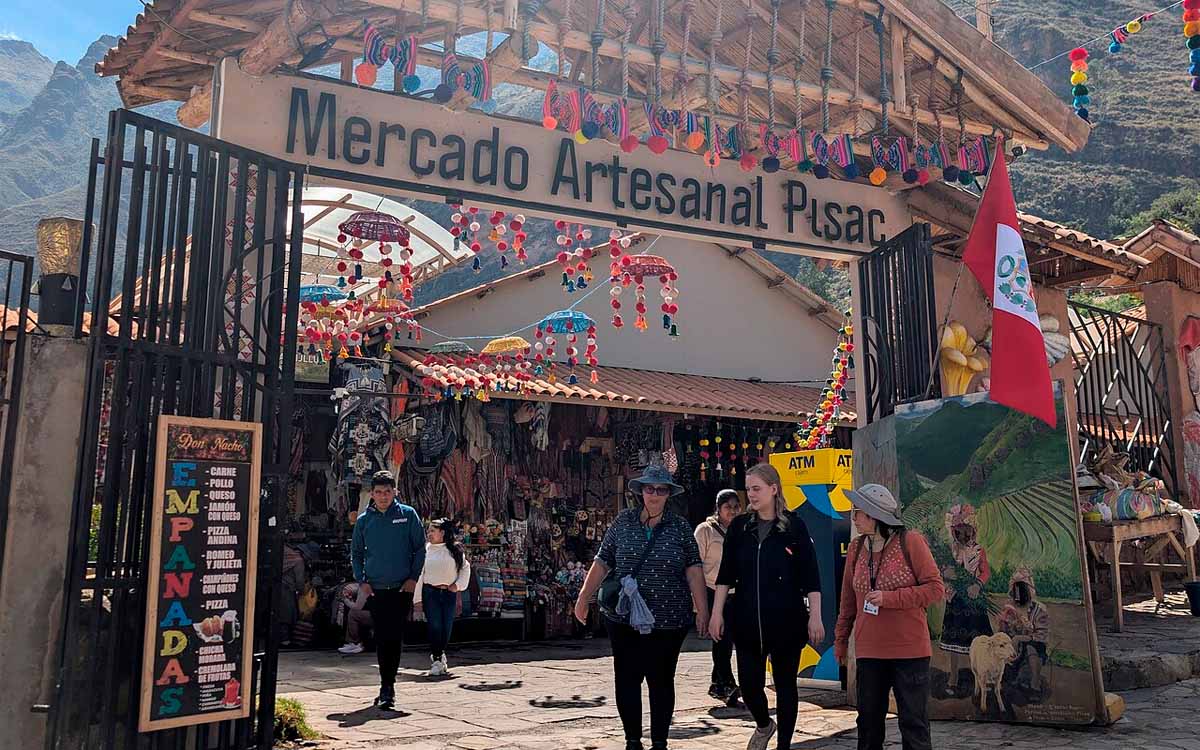
The market is the other main attraction of Pisac and takes place in the town, not in the archaeological park. This space is one of the main meeting points for visitors and locals, as it brings together products made by local artisans and everyday food. But what is sold in this market? Here, ceramics, jewelry, and textiles predominate in the central square, while fruits, vegetables, and grains spread along the side streets. It is a good place to buy souvenirs and Andean handicrafts, and to see everyday products from the area.
Busiest days
The market officially takes place on Tuesdays, Thursdays, and Sundays, although due to its popularity it usually occupies the square and nearby streets every day. Sunday is the biggest day. Merchants set up their stalls around 9 a.m. and start packing up around 5 p.m.
Shopping tips
- Arrive early. This way you can browse the stalls calmly and avoid the busiest peak hours.
- Compare before buying. With the popularity of the market prices have gone up, and today purchases are often made from middleman vendors rather than the weaver themselves.
- Negotiate with respect. Bargaining is customary, but it is best to do so politely.
- Take care of your belongings. Pickpockets often operate in crowded areas, like this market.
If you are interested in traditional textiles, we recommend reading Woven Wonders: The Colorful Chinchero Textiles.
The town of Pisac
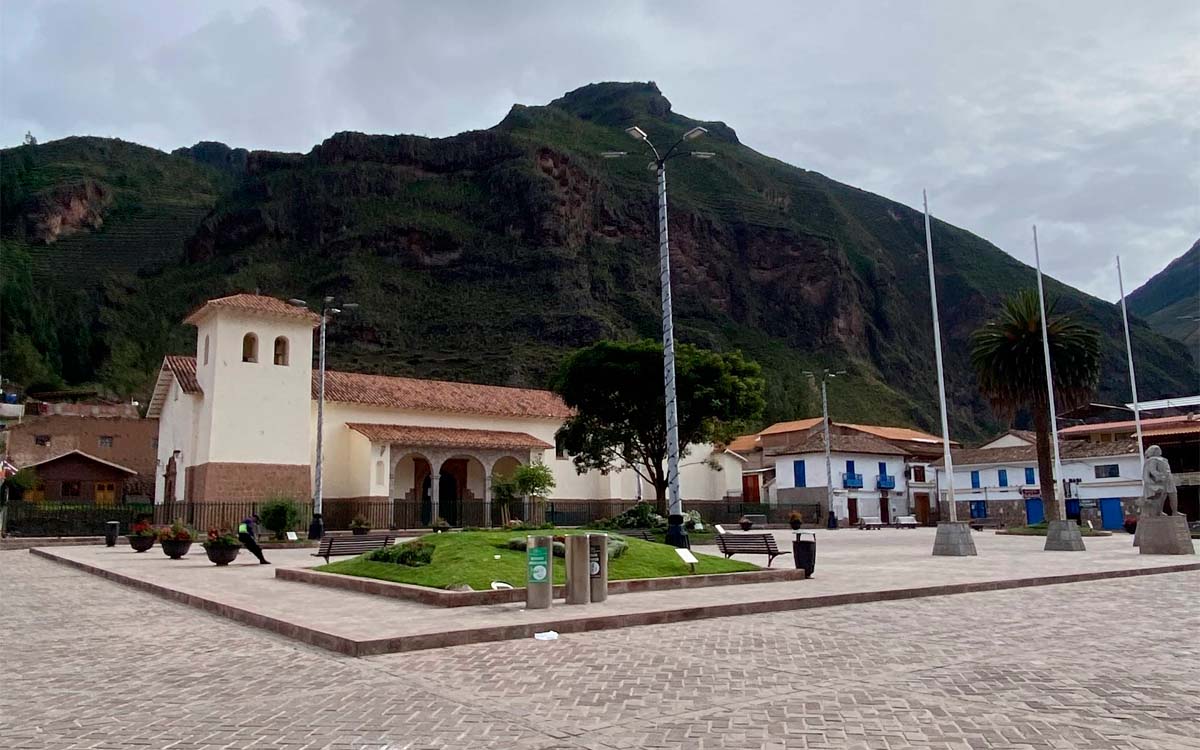
Beyond the market, it is worth walking through the town at a calm pace. The current town was built in the valley by Viceroy Toledo in the 1570s. Among its main attractions, its main square and church stand out, where ancient customs are still preserved, as well as its traditional clay ovens, known for making homemade breads and empanadas.
- Square, church, and streets: The main square is the center of local life and the starting point for exploring nearby streets. Pisac has a very attractive colonial church, where masses in Quechua are held every Sunday.
- Clay ovens and their empanadas: Among the most remembered corners of the town are its clay ovens. Tucked in the narrow streets are large clay ovens, and the most authentic one is a colonial oven dating back to the 1830s. From them come homemade empanadas and breads, some of which are vegetarian.
Practical information about the Archaeological Center of Pisac
Schedules and tickets (tourist ticket)
To enter the Archaeological Park of Pisac you need the Tourist Ticket of Cusco (Boleto Turístico del Cusco), which is offered in two options:
- Full ticket: Costs S/ 130, includes 16 tourist attractions, and is valid for 10 days.
- Partial ticket: Costs S/ 70, allows you to visit 4 tourist attractions, and is valid for 2 days.
If you are only going to see Pisac and a couple of other sites in the Sacred Valley, the partial ticket may be enough, but make sure to choose the one that includes Pisac. There are several versions of the partial ticket.
If you do not have the ticket yet, you can buy it at the small control booth at the start of the trail that goes up from the town. Upon entering, an ID document matching the name printed on the ticket is required, so bring your passport or ID card.
Best time to visit
Cusco and its surroundings have two seasons: the rainy season, roughly from November to March, and the dry season, from April to October. In the dry season, you can explore sites like Pisac and Ollantaytambo without worrying about mud or trail closures. That makes it the most comfortable option for the ruins, although it is also when there are more visitors.
The rainy season has its own charm. In January, for example, there are travelers who visit the Sacred Valley despite the rain because the landscape is greener, it is fresh corn season, and there are fewer people. To learn about the weather month by month in the region, you can check this guide: "Cusco Peru Weather: Climate, Seasons & Best Time to Visit".
Recommended time
The tour through the ruins takes about an hour and a half. Reaching the second ruins takes about 45 minutes more, and walking down to the town takes approximately another hour. If you do the full tour descending on foot, estimate about three and a half hours, not counting the time for the town and the market.
Pisac is located about an hour by road from Cusco. Many tours combine it with other sites: there are excursions lasting about 8 hours that include Pisac, its market, and several sites near Cusco. If you want to enjoy it without rushing, it is ideal to dedicate at least half a day to it.
How to visit Pisac: on your own or on a tour?
Pisac can be visited in two ways, and the best option depends on how much time you have and how much freedom you want.
Visiting Pisac on your own
Advantages:
- Flexibility: You choose your schedule and how much time you spend at the ruins, the market, or the town.
- Lower cost: Collective vans are the most economical way to get there.
- Tailored route: A common option is to take a taxi to the upper entrance of the park and walk down through the ruins to the town, thus avoiding the climb.
However, keep in mind that you will have to organize transportation, buy the ticket, and return to Cusco on your own. Collective vans leave when full. If you plan to walk from the town up to the ruins, it is a demanding climb due to the altitude. Only do it if you are already acclimated.
Visiting Pisac on a tour
Advantages:
- Logistics solved: Transportation and schedules are already organized.
- Guide: Someone to explain the meaning of the sectors, which is sometimes not understood just by looking at the ruins.
- Multiple sites in one day: Tours usually combine Pisac with other places in the Sacred Valley.
However, keep in mind that the schedule is more fixed and the time at each site is limited. Before booking, it is wise to ask what the tour includes (entrance tickets, lunch, duration).
How to combine Pisac with other sites in the valley
Pisac works very well as a first stop. A common recommendation is to visit the ruins early in the morning to have them almost empty before the market crowds arrive, and leave Moray and Maras for mid-morning and Ollantaytambo for the afternoon.
These are the most common combinations:
- One day: Pisac and Ollantaytambo, or a longer circuit that also includes Chinchero, Moray, and Maras.
- Two days: Pisac and Ollantaytambo on the first day, and Chinchero, Maras, and Moray on the second day.
- On the way to Machu Picchu: many travelers tour the valley during the day and then take the train from Ollantaytambo to Aguas Calientes.
If you want to experience everything in a single day, you can check out our Combo Sacred Valley Day Trip, a one-day guided tour that includes the Pisac market, the Pisac archaeological site, Ollantaytambo, Chinchero, Moray, and the Maras salt mines.
What to visit near Pisac?
Pisac is an excellent first stop, but the Sacred Valley offers much more. These four sites can be combined with your visit, either on the same day or on a two-day route, depending on the time you have.
- Ollantaytambo: It is one of the best-preserved Inca towns and is still inhabited. Its cobblestone streets retain their original layout, and above the town rises a fortress with terraces and ceremonial structures.
- Moray: This site impresses with its circular terraces, which form a kind of sunken amphitheaters in the earth. It is believed that the Incas used it as an agricultural laboratory, since each level has a different microclimate that allowed testing crops under different conditions.
- Maras Salt Mines: They are thousands of salt pools descending along the mountain slope. They are fed by a natural spring and have been used since Inca times. Today, local families still work them, making it a living landscape rather than just a ruin.
- Chinchero: This town is known for its textile tradition and its colonial church built on Inca foundations. There, you can watch spinning and dyeing demonstrations with natural dyes, and the market is liveliest on Sundays. It is located at high altitude, around 3,762 m, with wide views of the valley.
Frequently asked questions
- How much time is needed to visit Pisac?
To explore the ruins calmly, calculate between 2 and 3 hours. If you want to see the full site and walk down to the town, it can take 3 or 4 hours. If you also include the market and the town, it is ideal to set aside half a day. - What day is best to go to the market?
Sunday is the biggest and liveliest day. The market officially takes place on Tuesdays and Thursdays, which are usually quieter and less crowded. Even so, there are always stalls in the square during the week. Vendors usually set up around 9 a.m. and pack up around 5 p.m. - Can Pisac be visited in half a day?
Yes. With an early departure from Cusco, it is possible to see the ruins and explore the market and the square in a few hours. A practical option is to take a taxi to the upper entrance of the park and walk down toward the town. Keep in mind that the trip from Cusco takes between 45 minutes and 1 hour. - Do I need the tourist ticket to enter the archaeological center of Pisac?
Yes. Entry to the archaeological park is not sold separately and is accessed with the tourist ticket, either the full ticket or the partial ticket for the Sacred Valley. Confirm the current price before traveling, as it may change. - What is the best time of year to visit Pisac?
The dry season, which runs approximately from April or May to September or October, is the most comfortable: there are clear skies and dry trails. In the rainy season, the landscape is greener, but the paths can be slippery. - Can you hike up from the town to the ruins?
Yes, but it is a demanding climb. It is about 3.6 km with an elevation gain of more than 400 meters, which according to some travelers takes close to 3 hours uphill and 1.5 hours downhill. It is best to do it only if you are already acclimated and have hiked in the area. - Is Pisac at a lower altitude than Cusco?
Yes. The Sacred Valley is at a lower altitude than Cusco, and the town of Pisac is located at 2,972 m, so it is usually considered a good option for acclimating. The ruins are higher up, at about 3,300 m, so it is best to walk without rushing and stay well hydrated.