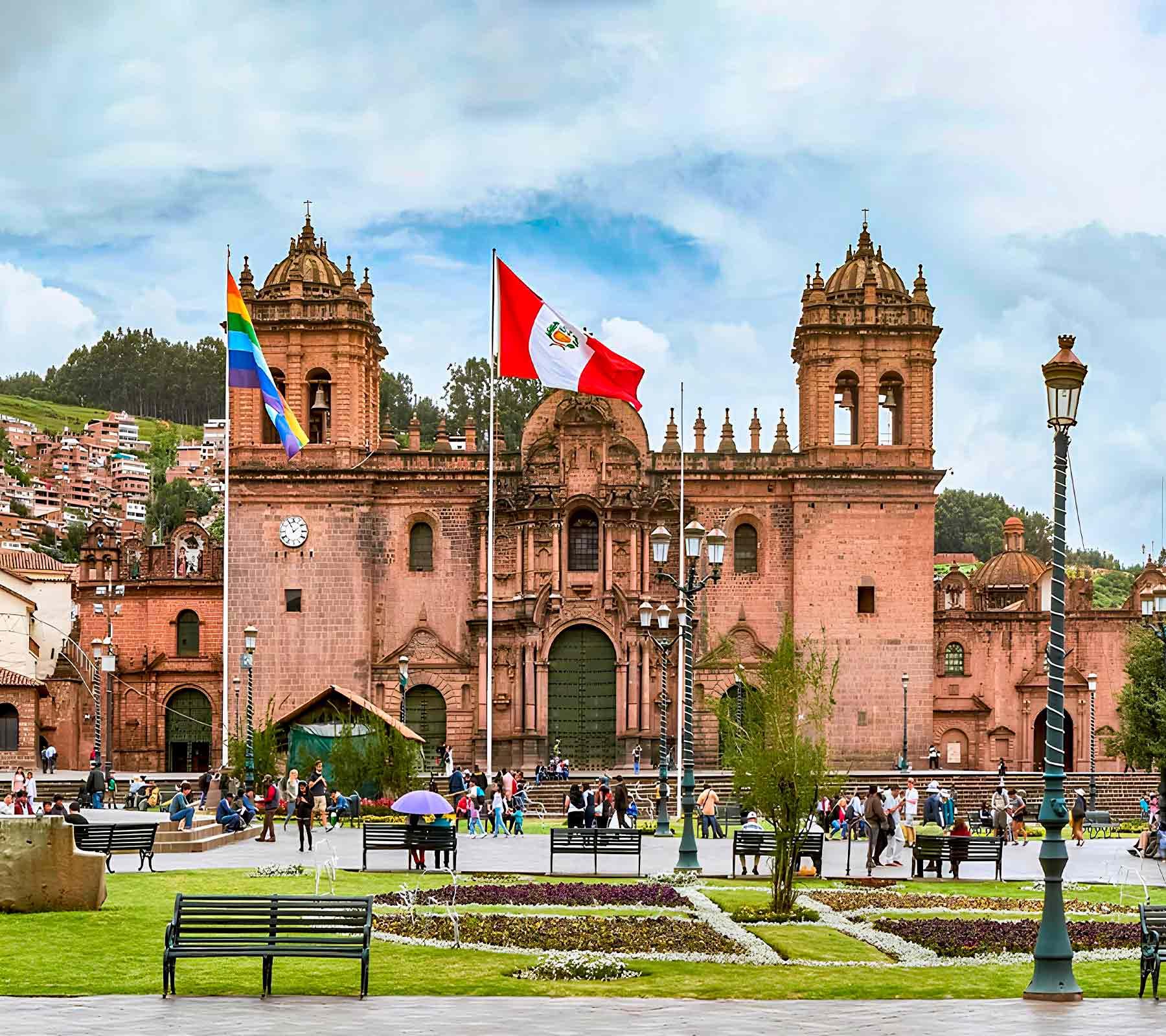
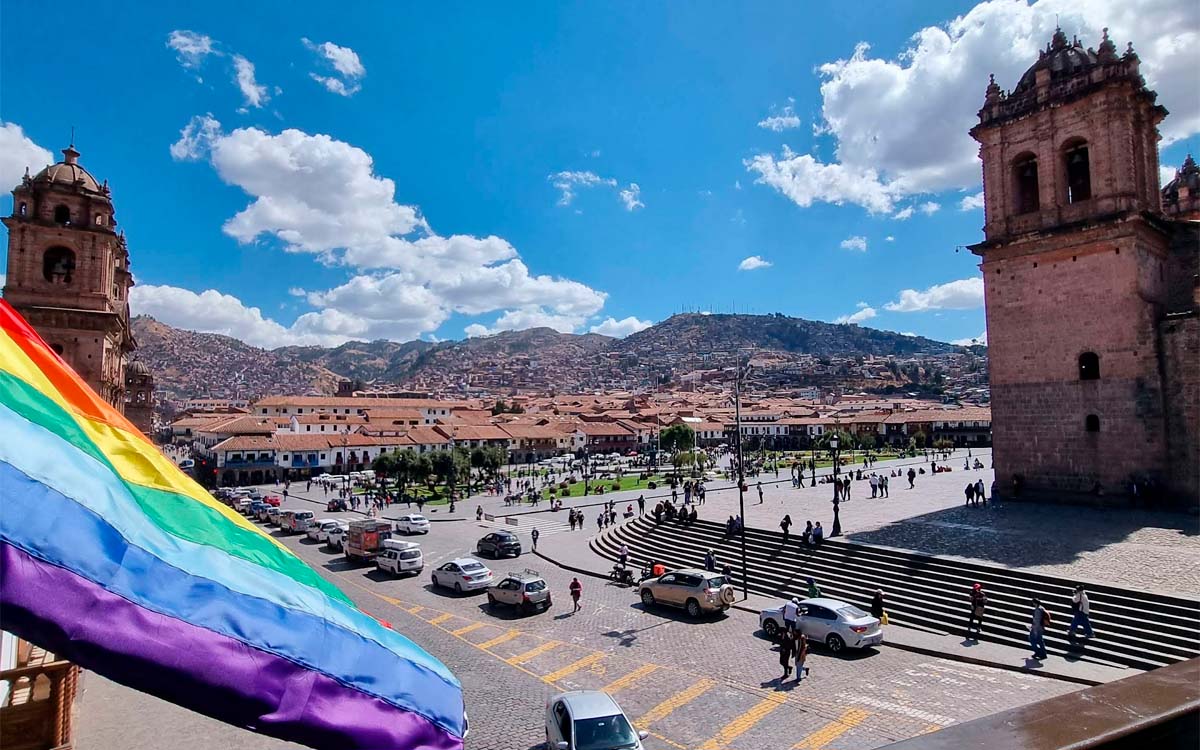
The Plaza de Armas is the central landmark of Cusco, a city that was the capital of the Inca Empire before the Spanish conquest. In Inca times it was known as Huacaypata or Aucaypata, and it worked as the ceremonial and administrative center of the empire, where military parades and religious ceremonies were held. The original plaza was about twice the size it occupies today.
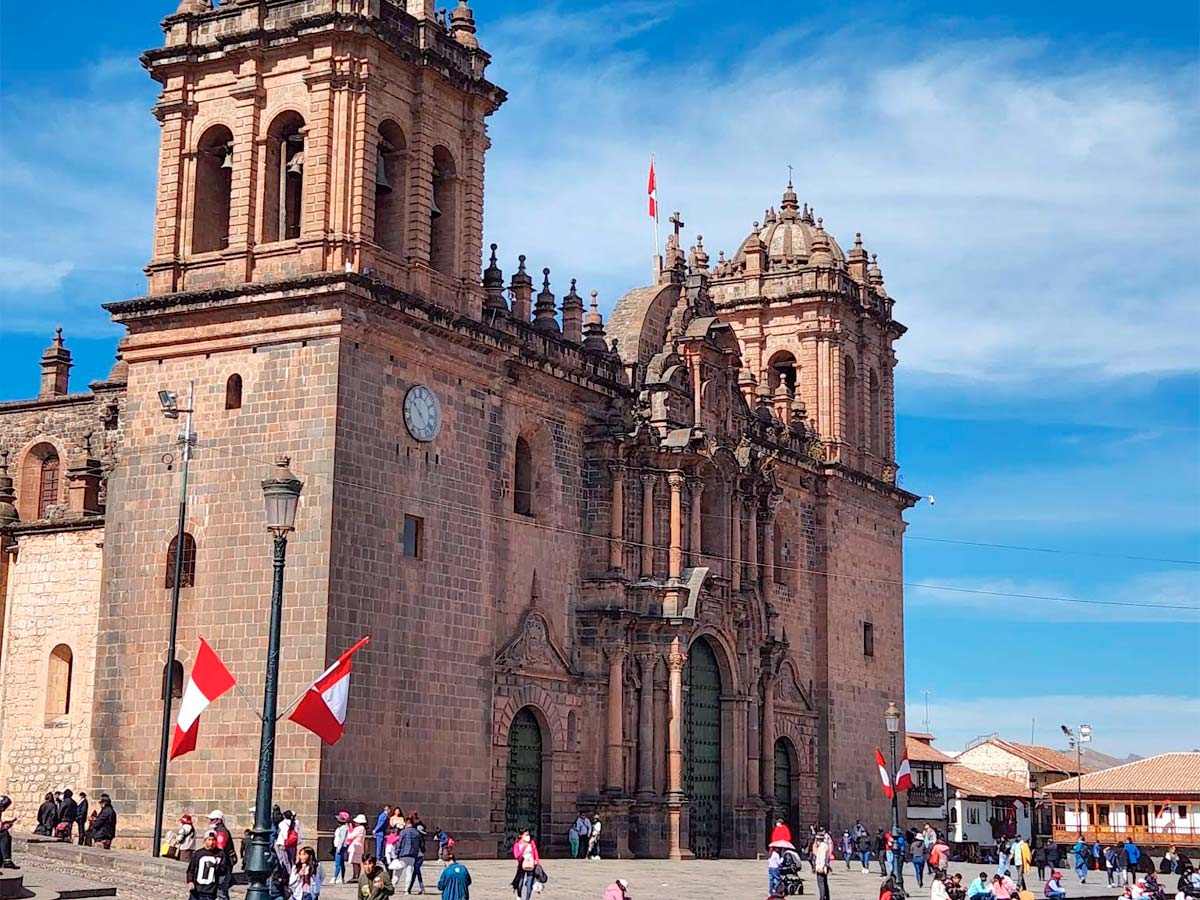
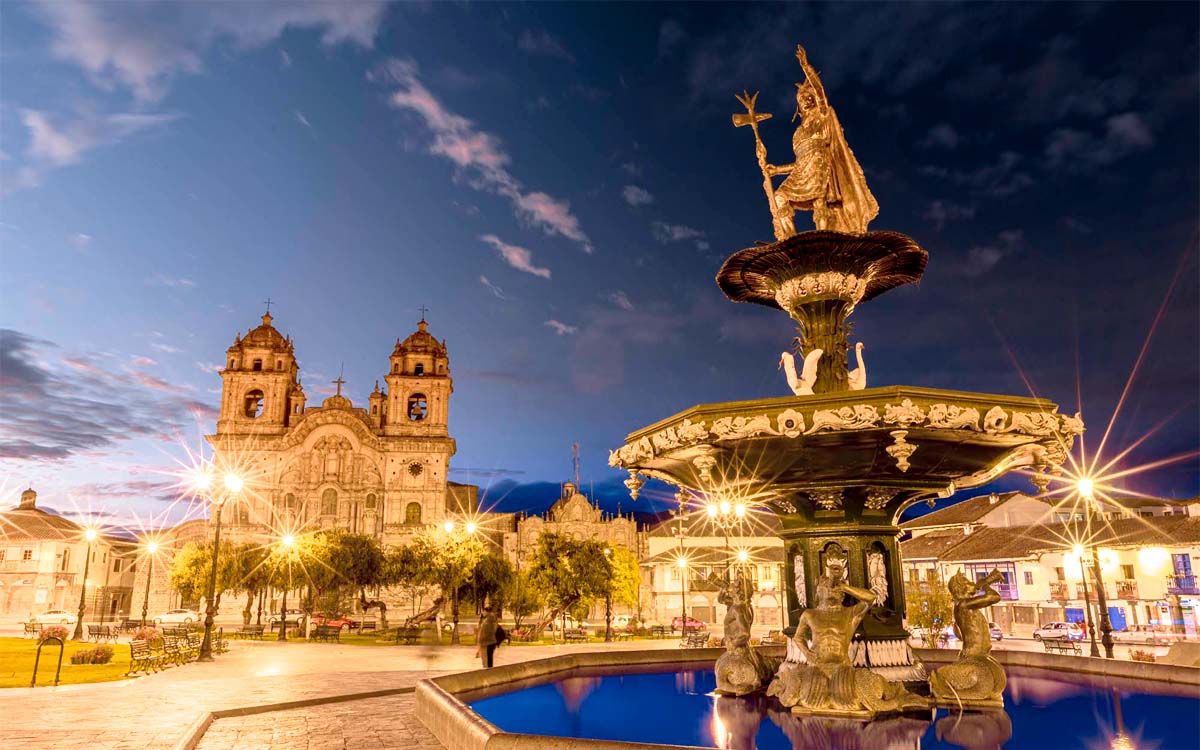
After the Spanish conquest in 1532, the plaza was reduced and rebuilt with colonial buildings on the bases of old Inca palaces. Today it houses two of the most important buildings in the city: the Cathedral of Cusco, located to the northeast, whose construction started in 1559; and the Church of the Society of Jesus, to the southeast, built by the Jesuits in the 16th century. Both are part of the Monumental Zone of Cusco, declared a UNESCO World Heritage Site.
In this guide we will look at the history of the plaza in more detail, what can be visited inside and around it, practical info to plan the visit (hours, entrance prices, and best times to go), and the nearby places worth checking out afterwards.
History of the Plaza de Armas
In the times of the ancient Incas, the plaza was known as Huacaypata (also written in chronicles as Aucaypata or Haucaypata), a Quechua term that different sources translate as "square of tears" or "square of warriors." It functioned as the ceremonial, military, and administrative center of the Inca Empire: military parades were held there, trophies from victorious campaigns were shown, and large-scale religious ceremonies took place.
However, all this changed with the arrival of the Spaniards; since Francisco Pizarro took Cusco for Spain in 1532 and renamed the plaza "Plaza de Armas". From then on, the Inca temples and palaces surrounding it were torn down or reused as foundations for the new colonial buildings.
Building of the Cathedral and the Church of the Society of Jesus
| Building | Start | Completion | Detail |
|---|---|---|---|
| Cusco Cathedral | 1559 | 1654 | Built over the palace of Inca Wiracocha; almost a century of work |
| Church of the Society of Jesus | 1571 | Rebuilt after 1650 | Raised by the Jesuits; an earthquake destroyed it and it was rebuilt |
On the fusion of architectural styles
The fusion between the Inca and colonial styles is not just aesthetic, it is literal: a big part of the stone used to build the Cathedral comes from blocks brought from the fortress of Sacsayhuaman, and the building was raised directly on the foundations of the palace of the Inca Wiracocha. This technique of reusing Inca foundations and stone is repeated in several buildings of the plaza.
On the artistic side, this fusion is seen in the Cusco School, a colonial painting current that combined 17th-century European religious techniques with Andean iconographic elements. A documented example is the painting of the Last Supper by Marcos Zapata, inside the Cathedral, which represents the main dish as guinea pig instead of the traditional European lamb.
What to see in the Plaza de Armas of Cusco?
The Plaza de Armas concentrates three main points of interest: the Cathedral, the Church of the Society of Jesus, and the markets with craft trade. Below is the detail of each one:
1. The Cathedral of Cusco
The Cathedral Basilica of the Virgin of the Assumption dominates the plaza from the northeast side. It was built over the old palace of the Inca Wiracocha, using stones brought from the Sacsayhuaman complex.
Inside, three elements stand out:
- The Cusco School: With a collection of canvases painted by indigenous artists between the 17th and 18th centuries. The best-known work is The Last Supper by Marcos Zapata, where the main dish on the table is a roasted guinea pig instead of lamb.
- The Lord of the Earthquakes ("Taitacha Temblores"): Sworn patron of the city. The image has darkened over time due to the smoke of the votive candles lit in front of it.
- The carved choir: A work of colonial woodwork in cedar wood, located in front of the main altar.
2. Church of the Society of Jesus
Located on the southeast side of the plaza, this church was built by the Jesuits over the Amaru Kancha, land that belonged to the Inca Huayna Capac. It is considered one of the representative examples of Andean baroque.
3. Craft markets and local artisans around the plaza
The plaza itself does not have a market. Craft trade is concentrated in the many sales centers surrounding it, like the Portal de Panes and the Portal de Confitería, with souvenir, silver, and alpaca textile shops.
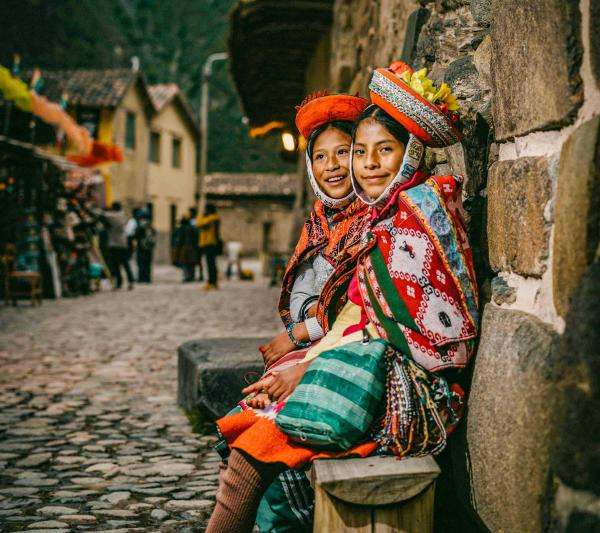
A few blocks away, on streets like Triunfo or Loreto, it is common to find artisans and weavers in traditional Andean clothing working on textiles by hand.
Practical information for your visit
To organize your tour of the Plaza de Armas of Cusco, these are the key details:
Visiting hours
| Place | Schedule |
|---|---|
| Cusco Cathedral | Monday to Sunday, 10:00 a.m. – 6:00 p.m. |
| Church of the Society of Jesus | Monday to Sunday, 9:00 a.m. – 5:05 p.m. |
Entrance prices: Which ticket do you need?
It is common to confuse the different passes of the city. This is how they are divided:
- Individual tickets: Cathedral, S/ 40.00 (~USD 12); Church of the Society of Jesus, S/ 16.00 (~USD 5).
- Religious Circuit Ticket (CTR): S/ 30.00. Includes the Cathedral, San Blas Church, San Cristobal Church, and the Archbishop's Palace. It is bought in person at the ticket offices of each site.
The Cusco Tourist Ticket (BTC) is also available, but this does not include the Cathedral or the Church of the Society of Jesus. It covers archaeological sites (such as Sacsayhuaman, Ollantaytambo) and some museums in the city.
Best time to go
To take pictures without crowds, the recommendation is to go between 6:30 a.m. and 8:00 a.m. The square is practically empty and has soft light for the facades. Likewise, there is the option to visit it at sunset, between 5:30 p.m. and 6:15 p.m., when the colonial lanterns and the lights of the houses on the surrounding hills turn on.
How to get to the Plaza de Armas of Cusco?
Getting there is simple since all routes in the city connect to the historic center:
- From the Airport (Velasco Astete): The safest and most comfortable option is to take a taxi inside the airport. The trip takes between 15 and 20 minutes depending on traffic and costs an average of S/ 15.00 to S/ 20.00.
- From the Bus Terminal: A taxi to the square will take you about 10 or 15 minutes and the fare is around S/ 8.00 or S/ 10.00.
If you stay in the historic center, you do not need transportation: it can be walked.
Surroundings and what to do next
-
San Blas Neighborhood
A few blocks uphill from the square, through narrow stone streets, is the San Blas neighborhood. It is known for its artisan workshops, independent art galleries, and cafes set up in old colonial mansions. It is a good destination if you are looking for Cusco ceramics, silverware, or paintings by local artists. Its steep streets also offer some of the best viewpoints toward the historic center of Cusco.
-
Nearby gastronomy
Around the square and in the adjacent streets there is a wide range of restaurants with traditional dishes:- Pisco sour: the national drink of Peru, present on the menu of practically all bars and restaurants in the area.
- Guinea pig (cuy): usually prepared baked or fried, it is one of the most representative dishes of Andean gastronomy.
- Alpaca: served in different preparations, from lomo saltado to grilled, and it is a common protein alternative on Cusco menus.
-
Sacsayhuaman
About 20-30 minutes walking from the square (or a short taxi ride), is the Inca fortress of Sacsayhuaman, with its large stone walls and panoramic view of the city. It is one of the sites included in the Cusco Tourist Ticket. From its high location you get one of the most complete panoramic views of Cusco. It is one of the sites included in the Cusco Tourist Ticket (BTC). -
Nightlife around the square
At night, the Plaza de Armas and the streets close to it (especially Calle Plateros) concentrate a good part of Cusco's nightlife. The offer goes from quiet pubs to clubs and local venues with live music mixing rock with Andean rhythms. Second-floor establishments are a common option to close the day: several have colonial balconies or heated terraces with a direct view of the square.
Festivities in the Plaza de Armas
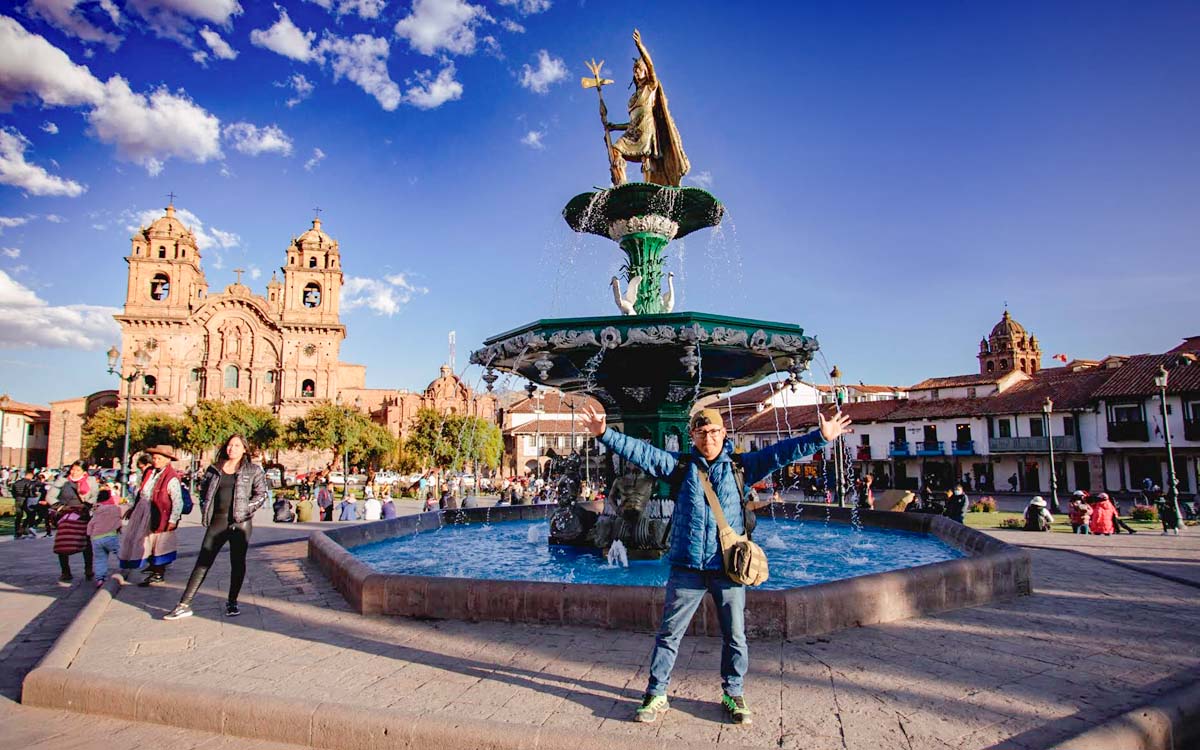
The Plaza de Armas is not just a static monument; it is the main stage for the most important traditions of the Andean calendar. If your readers manage to make their trip coincide with any of these specific dates, they will see how the square fills with music, colorful costumes, and large parades:
Holy Week: Procession of the Lord of the Tremors
Holy Monday (second day of Holy Week) is considered the main day of this celebration in Cusco. After a communion mass led by the archbishop at noon, the image of the Lord of the Tremors (Taytacha Temblores) leaves the Cathedral and goes around the perimeter of the Plaza de Armas and nearby streets like Plateros, Santa Teresa, Teatro, Granada, and Marqués, before returning to the Cathedral.
Technical notes about this event:
- It draws between 80,000 and over 300,000 people depending on the year, between believers and tourists.
- During the image's route, access to the Cathedral perimeter is usually restricted for safety.
- Devotees throw ñucchu (red flower that only blooms on these dates) from the balconies.
- If you plan to go, arrive at least 1-2 hours in advance to get a good spot; the square fills up fast.
- The date changes every year because it depends on the liturgical calendar (Holy Monday, before Easter).
Corpus Christi
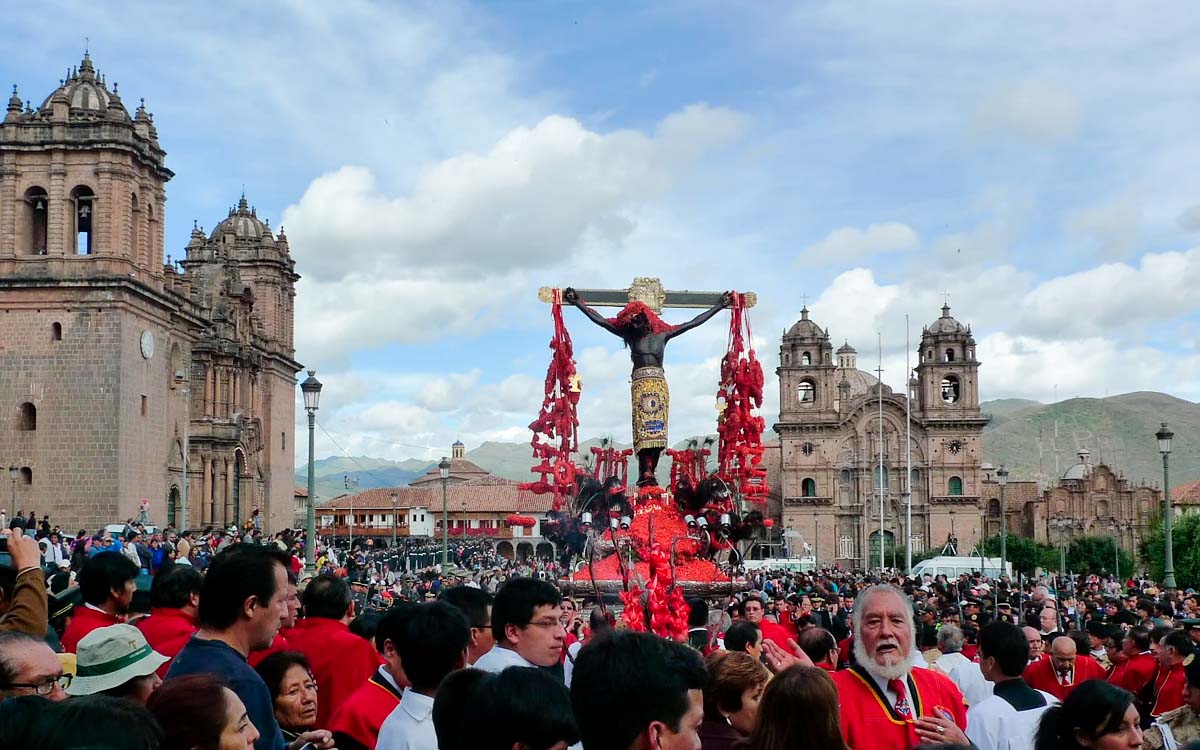
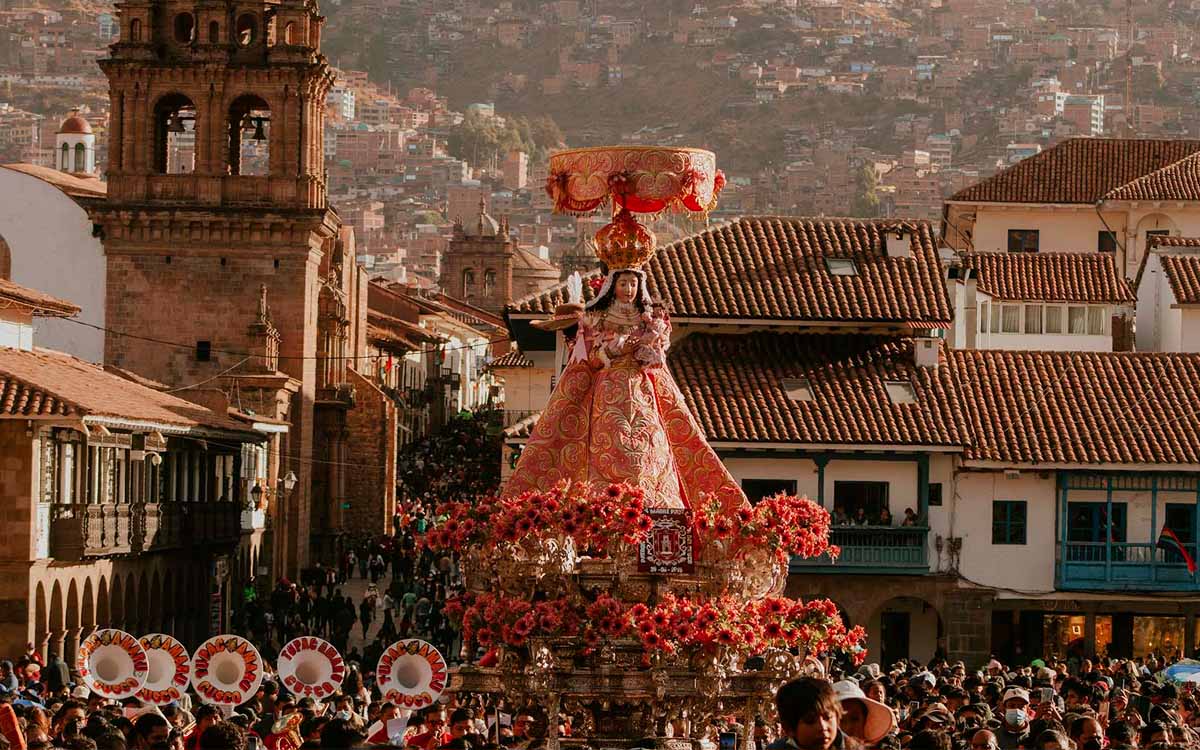
It is celebrated in early June, about 60 days after Easter, so the exact date varies yearly. It consists of the procession of 15 images of patron saints, coming from different parishes and churches of Cusco, which converge toward the Plaza de Armas and the Cathedral.
Technical notes about this event:
- The images stay on display inside the Cathedral for a whole week after the main procession.
- It is a good date for documentary photography, since it mixes traditional clothing, band music, and a large display of flowers.
- Being a mobile religious date, it is a good idea to check the liturgical calendar of the specific year before planning the trip.
Inti Raymi
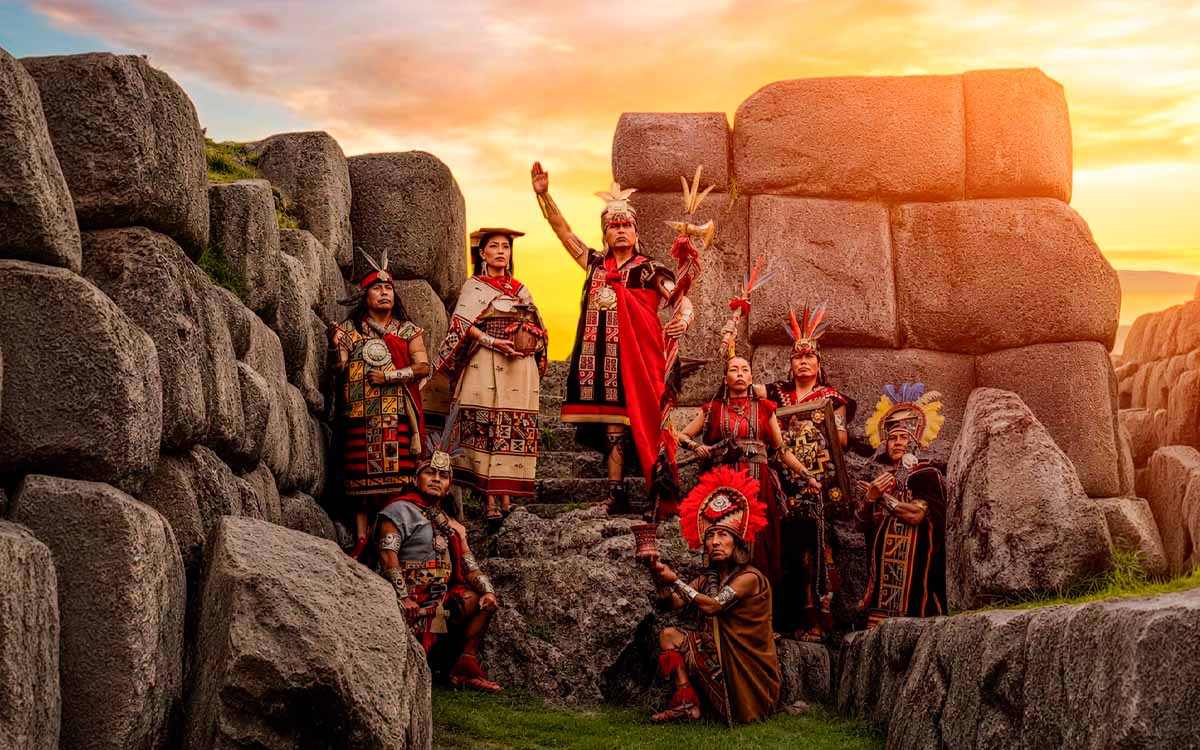
It is celebrated every June 24 and is the recreation of the Sun Festival, the most important Inca ceremony dedicated to the Sun god Inti. The main staging, with actors and hundreds of participants, happens in Sacsayhuaman, with paid tickets that sell out weeks in advance (prices vary by sector, from about S/ 235 to over S/ 850).
Technical notes about this event:
- In the Plaza de Armas a previous and free-access performance is held, without needing to buy a ticket.
- If you do not get a ticket for Sacsayhuaman, watching the version in the Plaza de Armas is a valid and free alternative.
- The city receives a high influx of tourists on this date; booking lodging several months in advance is recommended.
- It is the same week Cusco Day is celebrated (June 24), so there are extra cultural activities in the city for several days prior.
El Santurantikuy
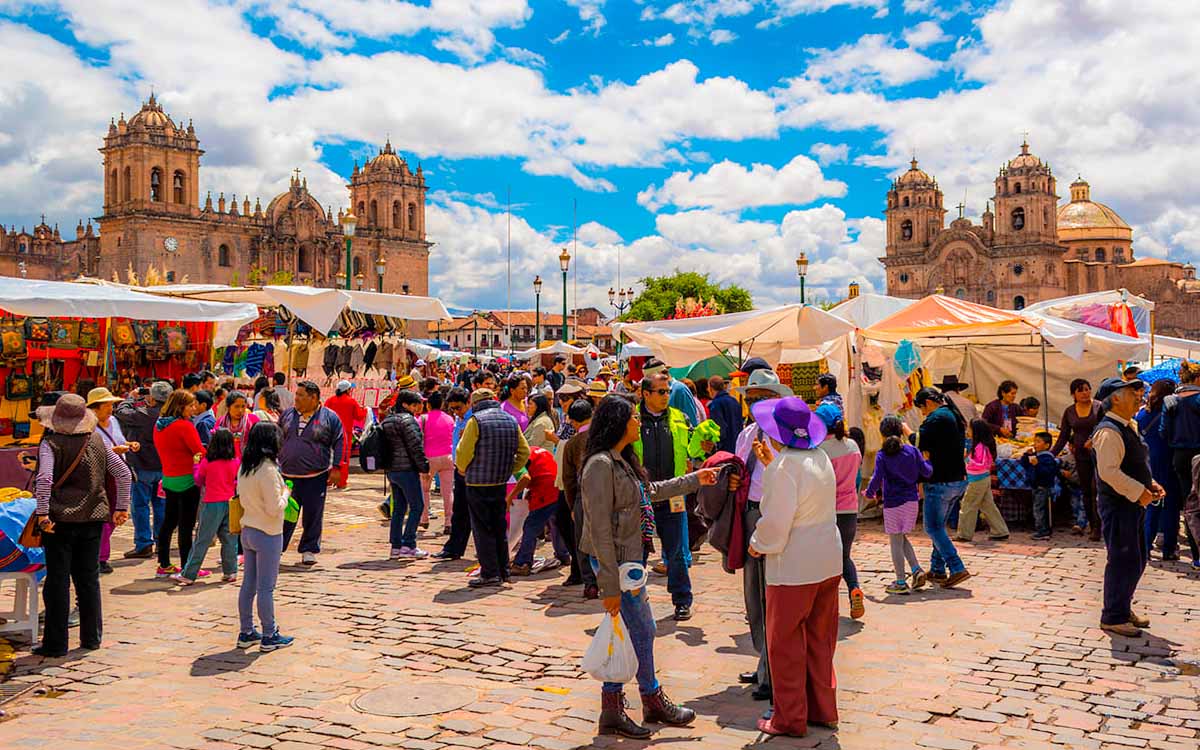
It is celebrated every December 24, with stalls set up starting the 22nd, and it is one of the largest popular art fairs in Peru. Its name in Quechua means "sale of saints" (santu = saints, ticuy = sale). Hundreds of artisans (more than 800 according to reports from recent years) display their work directly on blankets on the ground of the plaza.
What is sold? Carved figures for Christmas nativity scenes (the "Niño Manuelito" is the central piece), pottery, retablos, religious imagery, and various artisan products.
Technical notes about this event:
- It was declared Cultural Heritage of the Nation in 2009.
- Stalls are organized by category (imagery, pottery, natural products, leather, Christmas crafts).
- In recent years, the use of plastic to hand out products has been restricted, as part of the fair's environmental measures.
- It is a great time to buy authentic souvenirs made directly by artisans, with no middlemen.
Frequently asked questions about the Plaza de Armas of Cusco
- Is it free to enter the Plaza de Armas?
Yes, access to the plaza itself is completely free and open at any time of the day. What has a cost is the entry to the churches around it: the Cathedral (S/ 40) and the Church of the Society of Jesus (S/ 16). - How much time should I spend on the visit?
To walk around the plaza and visit the Cathedral calmly, between 1 and 2 hours is enough. If you also enter the Church of the Society of Jesus and walk along the nearby arcades, plan for between 2 and 3 hours in total. - What ticket do I need to enter the Cathedral?
You can buy the individual ticket (S/ 40) directly at the door, or the Religious Circuit Ticket (S/ 30), which also includes the San Blas Temple, the San Cristóbal Temple, and the Archbishop's Palace. - Can I take photos inside the Cathedral?
In general, taking pictures inside the Cathedral and the Church of the Society of Jesus is not allowed, as a measure to preserve the colonial works of art. The outer facade and the plaza can be photographed freely. - What is the best time of the year to visit the plaza?
It depends on what you are looking for. The dry season (May to September) has less rain but more tourists and higher prices. If you want to match a specific festival (like Holy Week, Corpus Christi, Inti Raymi, or Santurantikuy), it is a good idea to plan the trip according to those dates, since they change every year based on the liturgical calendar or are fixed (Inti Raymi on June 24, Santurantikuy on December 24). - How do I avoid altitude sickness when arriving at the plaza?
The plaza is at 3,399 meters above sea level, the same altitude as the historic center of Cusco. It is recommended to take the first day easy, avoid heavy physical effort, walk slowly, and drink coca tea. If you have strong symptoms (intense headache, trouble breathing), seek medical help. - What should I do if my visit matches a procession or festival?
Keep in mind that during events like the procession of the Lord of the Tremors or Inti Raymi, access to certain streets or the perimeter of the Cathedral can be temporarily restricted for security. It is a good idea to arrive early if you want to watch the event, or plan the walk through the plaza for another time of the day if you want to avoid crowds.
Another interesting blogs:
- Journey to the Sun Gate: Unveiling the Mysteries of Machu Picchu
- Qoyllur Rit’i: An amazing Andean festival
- Train Operations Resumed on Ollantaytambo – Machu Picchu
- Discovering the Heart of the Amazon: Manu National Park