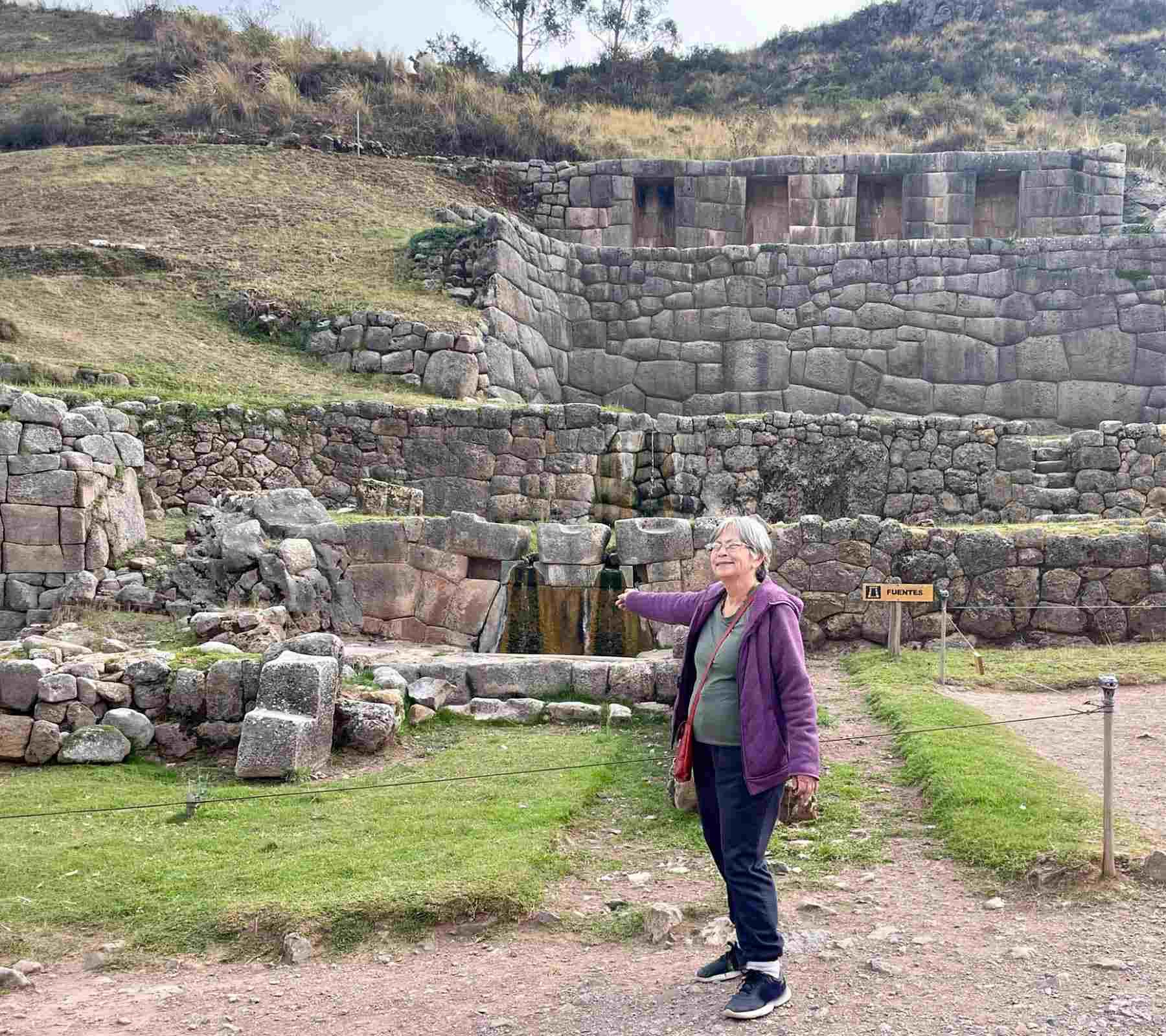
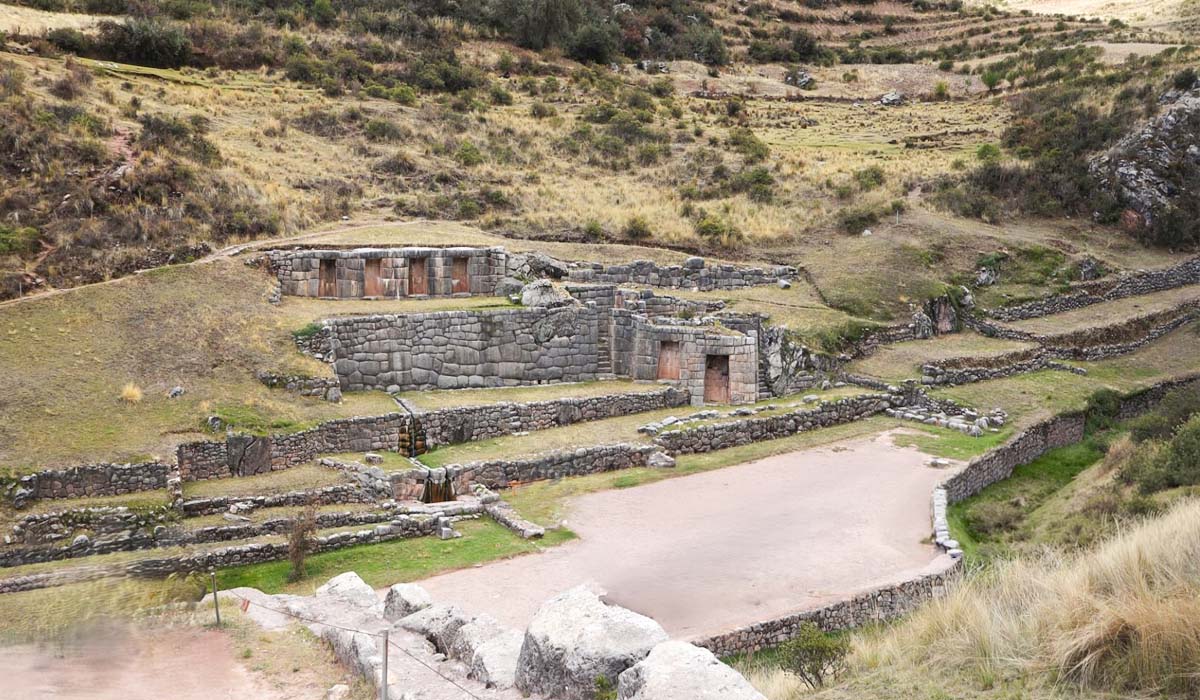
Tambomachay is an Inca archaeological site located just 7 kilometers from the city of Cusco, known for its sophisticated water channel system that is still working after more than 500 years. Also called the "Bath of the Inca", this place combines water engineering, limestone architecture, and a strong religious meaning linked to the worship of water, one of the most important elements in the Andean worldview.
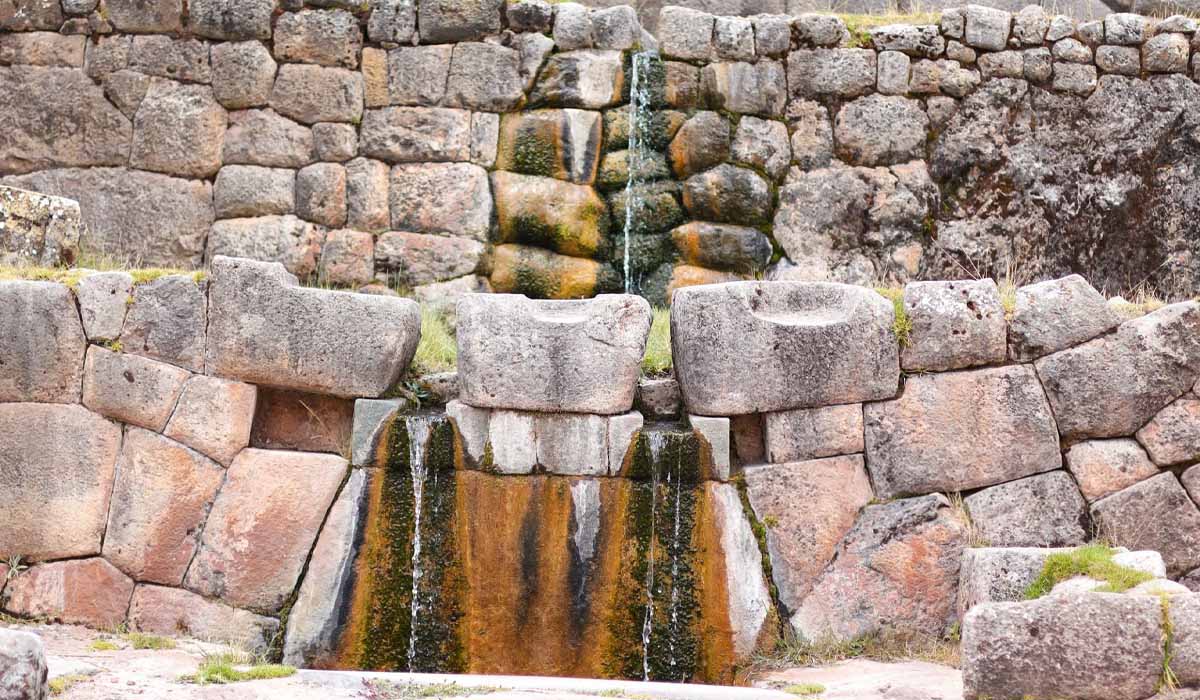
Unlike other archaeological sites in Cusco, Tambomachay does not stand out for its size (it takes up barely half a hectare) but for the precision of its design: religious fountains carved in stone that constantly distribute water to a series of ceremonial platforms. It is believed that this space worked as a place of rest and purification for the Inca nobility, and its closeness to Cusco makes it a quick visit that does not require a full day of travel.
Visiting Tambomachay is a good option if you are looking to complete your tour of Cusco with a less crowded site than Sacsayhuaman, but just as revealing about the relationship of the Incas with nature. It is part of Circuit I of the Cusco Tourist Ticket, along with Sacsayhuaman, Qenqo and Puca Pucara, so you can visit it on the same outing. Next, we tell you its history, hours, prices, and how to get there.
What does the name Tambomachay mean?
The name comes from two Quechua words: "tampu", which means accommodation or resting place, and "mach'ay", which translates as cave or rest, depending on the source. There is no single official translation, but the most accepted combination is "resting place" or "inn in the cave".
- Why is it known as the "Inca Bath"?
Although it is not its original name, Tambomachay is popularly called "The Bath of the Ñusta" (Inca princess) due to the two stone aqueducts that still carry water all year round. This nickname came up because of the ceremonial purpose of the site, linked to water purification, rather than evidence of it being a bath in the literal sense. - Does it have another name in historical sources?
Yes. Some chroniclers and researchers use variations like "Tambo Machay" (separated) or simply "The Inca Baths", although all of them refer to the same archaeological complex.
History and water worship in Tambomachay
Tambomachay is part of a group of archaeological sites (along with Qenqo, Puca Pucara and Sacsayhuaman) that the Incas organized following the ceque system: imaginary lines that started from the Coricancha, in the center of Cusco, and connected the main temples and shrines of the empire. Its location within this system confirms that it was not a minor site, but a key point in the sacred Inca geography.
In the Andean worldview, water represented the origin of life and one of the most worshiped forces. The Incas built in Tambomachay ceremonial fountains carved directly into limestone, connected to a network of channels that supplied the nearby settlements. The constant flow of water, present in every corner of the complex, reflects the importance this element had in the rituals of purification and renewal of the earth.
The exact origin of the water that feeds Tambomachay Cusco remains a mystery. The site was built over a river and natural springs, and the uneven ground of the area allows the liquid to flow through all the channels without the need for pumping or mechanical systems. The remarkable thing is that, more than five centuries after its construction, the water continues to flow with the same precision with which it was designed, something that surprises even modern hydraulic engineers.
Beyond its practical use, Tambomachay was also a resting place for the Inca nobility, where water purification had a spiritual component. Unlike other nearby sites with military or administrative purposes, here the goal was retreat and connection with nature, something that can still be felt when walking through its terraces and listening to the constant sound of water between the stones.
Another factor that makes Tambomachay unique is its good state of conservation. Unlike other Inca sites that suffered destruction during the Spanish colonization, this complex reached the present day practically intact, which allows us to clearly appreciate the original building technique and the water design that the Incas perfected over centuries.
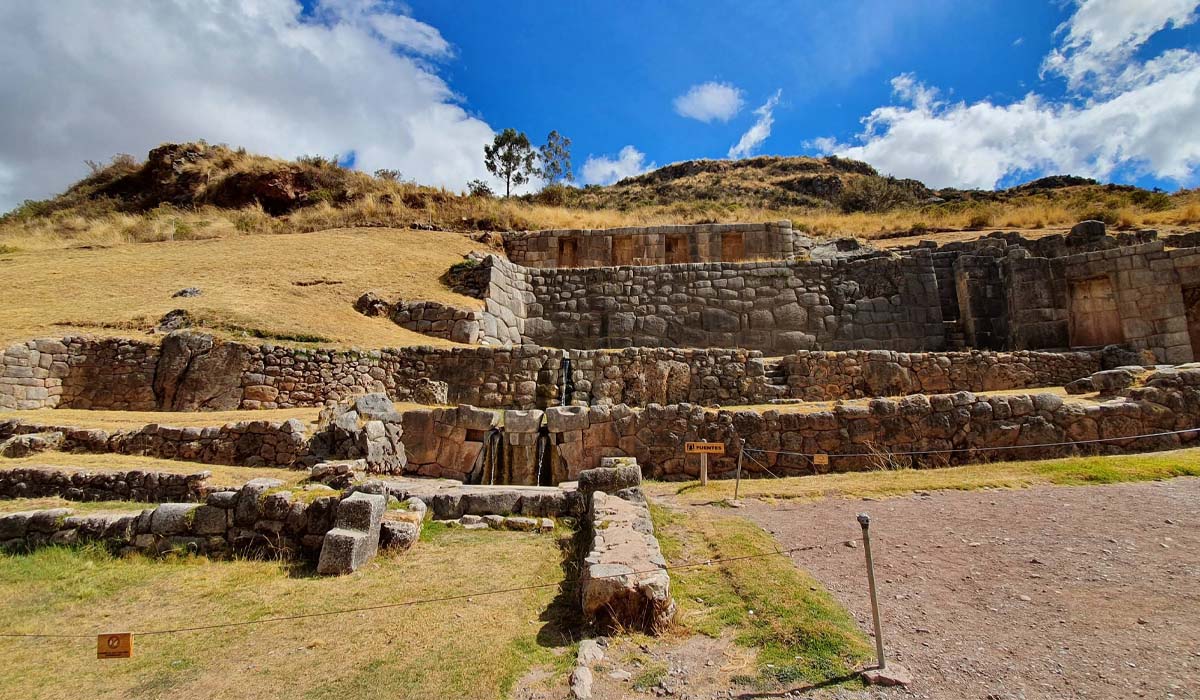
Location of Tambomachay
Tambomachay is located 7 km northeast of the city of Cusco, on the Cusco-Pisac road, and just 0.6 km from Puca Pucara, with which it shares a close archaeological relationship. Furthermore, its position within the Inca ceque system connects it directly with Qenqo and Sacsayhuaman, forming together Circuit I of the Cusco Tourist Ticket.
Schedule and ticket price 2026
Tambomachay opens every day of the week, from 7:00 a.m. to 6:00 p.m. It does not require a prior reservation or a separate ticket: access is included within the Cusco Tourist Ticket, managed by COSITUC.
| Ticket type | Price for foreigners | Price for locals | Validity | Includes |
|---|---|---|---|---|
| Full Ticket | S/ 130 | S/ 70 | 10 days | 16 attractions (Cusco, South Valley, and Sacred Valley) |
| Partial Ticket – Circuit I | S/ 70 | S/ 40 | 1-2 days | Sacsayhuaman, Qenqo, Puca Pucara, and Tambomachay |
If your plan is to only visit the archaeological sites near the city, like Tambomachay, Puca Pucara, Qenqo and Sacsayhuaman, the Partial Ticket of Circuit I is the cheapest option. On the other hand, if your itinerary includes several days in Cusco with visits to the Sacred Valley or the city museums, the Full Ticket is more convenient.
The ticket cannot be bought online officially. Consequently, the purchase must be made in person at the central office of COSITUC (Av. El Sol 103, Tourist Galleries) or directly at the entrance of some of the included sites, like Sacsayhuaman. It is mandatory to show a passport or ID document at the time of purchase and when entering each attraction.
How to get to Tambomachay from Cusco
Tambomachay is located just 7 km from the city of Cusco, on the Cusco-Pisac road, and barely 0.6 km from Puca Pucara. These are the options to get there:
- Public transport
The cheapest option. You must go to the Rosaspata bus stop, where vans heading to Tambomachay pass by. The trip takes between 25 and 30 minutes, and the approximate cost is S/ 2 to S/ 3 per person. The van staff usually helps tourists identify the correct stop. - Taxi
Ideal if you are looking for speed and comfort. The trip from the center of Cusco takes between 15 and 20 minutes, with an approximate cost of S/ 25 to S/ 35, depending on the starting point and if you negotiate the fare before getting in. - Tourist bus (City Tour)
This option not only takes you to Tambomachay, but it also goes through the entire Circuit I in a single departure: Sacsayhuaman, Qenqo, Puca Pucara and Tambomachay. Tours usually have pickup times at 8:30 a.m. or 1:30 p.m., last around 4 to 5 hours, and include a bilingual guide and round-trip transport. The average cost is around 30 to 35 USD per person (not including the Tourist Ticket or lunch). - Private guided tour
The best option if you are looking for a detailed explanation about the history and the water system of the site. Most operators in Cusco include Tambomachay within their City Tour packages, with the advantage of having a certified guide throughout the tour.
Tambomachay and Circuit I of the Tourist Ticket
Tambomachay is not visited alone: it is part of Circuit I of the Cusco Tourist Ticket, along with Sacsayhuaman, Qenqo, and Puca Pucara. These four sites are located a few minutes from each other, which allows you to visit them all in a single morning or afternoon, without needing to return to Cusco between visits.
Recommended order for the tour
The most efficient order —and the one that most city tours follow— is the following:
- Sacsayhuaman, the largest site and the usual starting point.
- Qenqo, a few minutes away, known for its canals and underground chambers carved in rock.
- Puca Pucara, the ancient "red fortress" that served as a checkpoint.
- Tambomachay, the final point, ideal to close the tour next to the sound of water.
This order avoids unnecessary backtracking and makes better use of time, since the four sites are connected by the same road to Pisac.
Why is it a good idea to buy the Circuit I Partial Ticket?
If your itinerary in Cusco is short (2 or 3 days) and you do not plan to visit the Sacred Valley or the city museums, the Circuit I Partial Ticket (S/. 70 foreigners | S/. 40 nationals) is cheaper than the Full Ticket and covers exactly these four sites.
The most practical way to do it
Although it is possible to visit the four sites on your own combining a taxi and short walks between each one, the most efficient option (especially if it is your first day in Cusco and you are still getting used to the altitude) is to book a city tour that includes transport, a guide, and the visit times already organized.
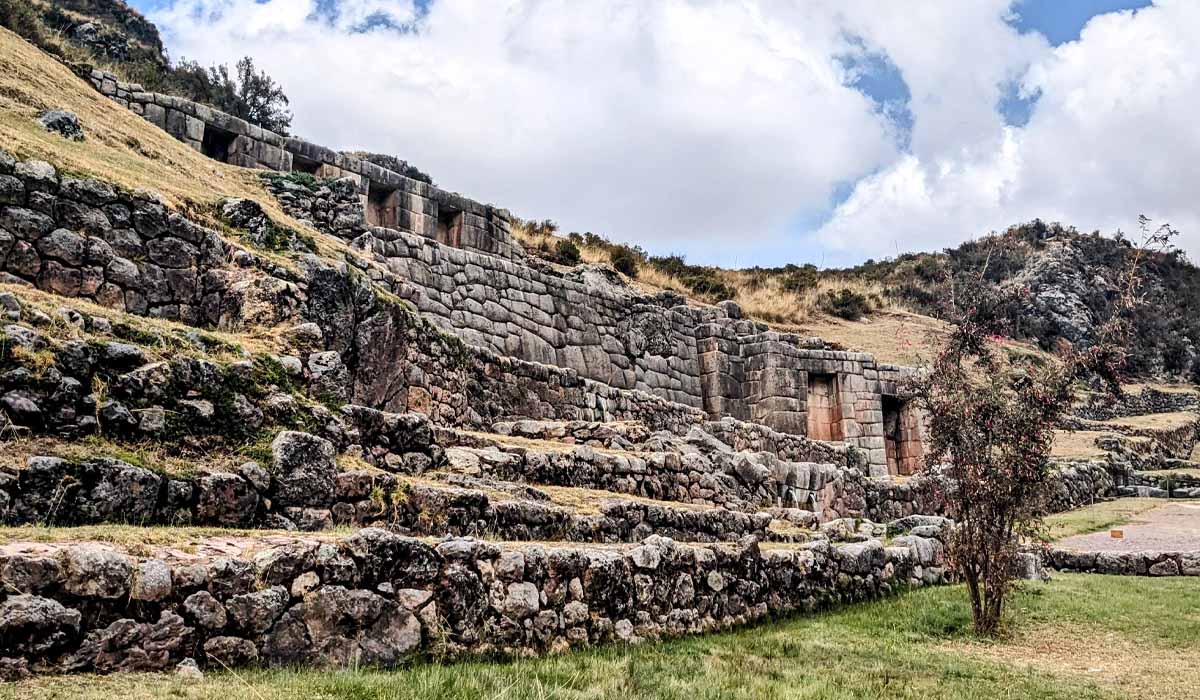
Best time and hour to visit
The weather in Tambomachay is similar to the rest of the city of Cusco: mostly dry and mild, with clear changes between the dry season and the rainy season.
- Dry season (April to October)
It is the best time to visit Tambomachay. The days are sunny, with clear skies that allow you to better appreciate the natural environment of the site and clearly photograph the water channels. Temperatures range between 12°C and 20°C during the day, although mornings and nights can be cold. June and August are the months with the highest tourist flow, so it is a good idea to visit early to avoid crowds. - Rainy season (November to March)
Although it is possible to visit the site during these months, rains are usually concentrated in the afternoons, so it is recommended to go in the mornings. The advantage of this season is that there are fewer tourists and the landscape around the complex looks greener.
What is the best time of the day?
It is recommended to visit Tambomachay in the afternoon, between 3:00 p.m. and 5:00 p.m. At this time the light is softer, there are fewer large groups of tourists (who usually arrive in the morning as part of the city tour), and temperatures are more pleasant, which also allows you to calmly appreciate the sound and the constant flow of water in the channels, the detail that gives meaning to its name.
Frequently asked questions
- How much does the entrance to Tambomachay cost?
The entrance ticket is not bought separately. It is included in the Cusco Tourist Ticket: the Full Ticket costs S/ 130 for foreigners and S/ 70 for locals (valid for 10 days), while the Partial Ticket for Circuit I (which includes Tambomachay, Sacsayhuaman, Qenqo and Puca Pucara) costs S/ 70 for foreigners and S/ 40 for locals. - How long does the visit to Tambomachay take?
A complete tour takes between 30 and 45 minutes. If you visit it as part of Circuit I along with the other three sites, consider between 3 and 4 hours in total, including transport. - Is Tambomachay included in the Machu Picchu ticket?
No. The Cusco Tourist Ticket and the entrance to Machu Picchu are completely independent. The entrance to Machu Picchu is handled separately through the Peruvian Ministry of Culture and must be booked in advance, especially in the high season. - Can Tambomachay be visited without a guide?
Yes. You can visit it on your own using public transport, a taxi, or your own vehicle, and tour the site at your own pace. However, by not having a guide, it is easy to miss details about its ceremonial function and the water system. If you are interested in deeply understanding the history of the place, a guided tour or an audio guide is recommended. - Is it necessary to book in advance?
No. The Tourist Ticket does not require a prior booking and can be bought on the same day of the visit, either at the main COSITUC office or at the entrance of some of the included sites. - Is Tambomachay accessible for people with reduced mobility?
The site has uneven ground and stone stairs, so access can be limited for people with reduced mobility. It does not have ramps or special adaptations.
Live the complete Inca experience
Tambomachay is just the starting point to discover the Inca legacy in Cusco. If you want to complete your adventure with an unforgettable experience, these are the ideal next steps for your itinerary:
- Explore the complete Circuit I
Book our Cusco City Tour and visit Sacsayhuaman, Qenqo, Puca Pucara and Tambomachay in a single guided tour, with transport and a bilingual guide included. - Reach Machu Picchu through the classic route
If you are looking for an authentic trekking experience, the short Inca Trail is the ideal option: walk original Inca trails and reach Machu Picchu through the Sun Gate, just as travelers of that time did. - Visit Machu Picchu in one day
If your time in Peru is limited, our One-day tour to Machu Picchu allows you to get to know the citadel without needing to spend the night, departing and returning from Cusco on the same day. - Design your complete trip
Contact us and our travel experts will help you put together a custom itinerary, combining the archaeological sites of Cusco with your arrival at Machu Picchu.
Other related blogs: