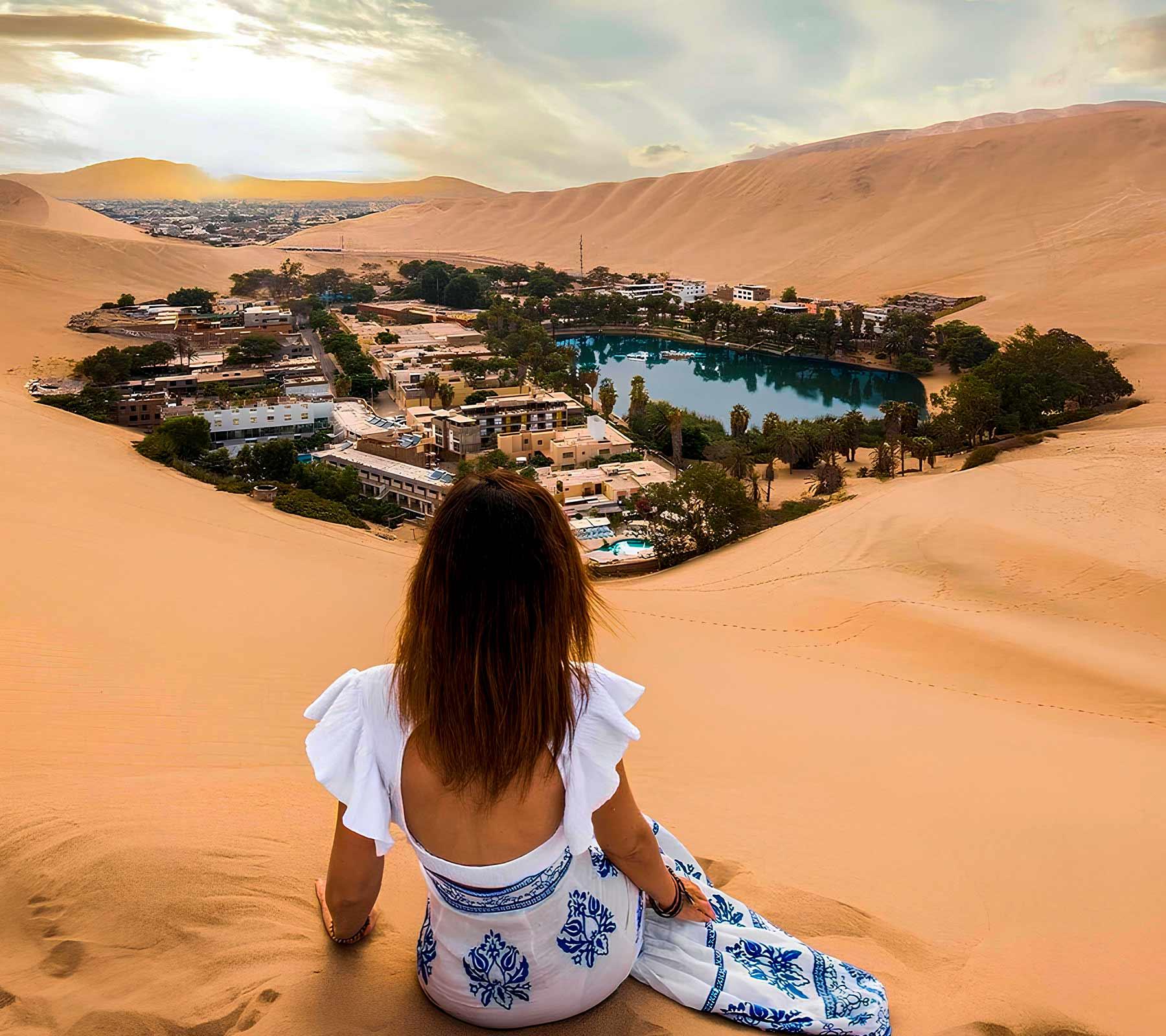
Located just 5 hours south of Lima and 15 minutes from the city of Ica, the Huacachina oasis is one of Peru's most distinct coastal destinations. Its name comes from the Quechua words meaning "crying woman." As a professional guide who has spent decades navigating Peru's varied geography, I highly recommend adding this stop to your southern coastal itinerary to see how a natural ecosystem adapts to harsh desert conditions.
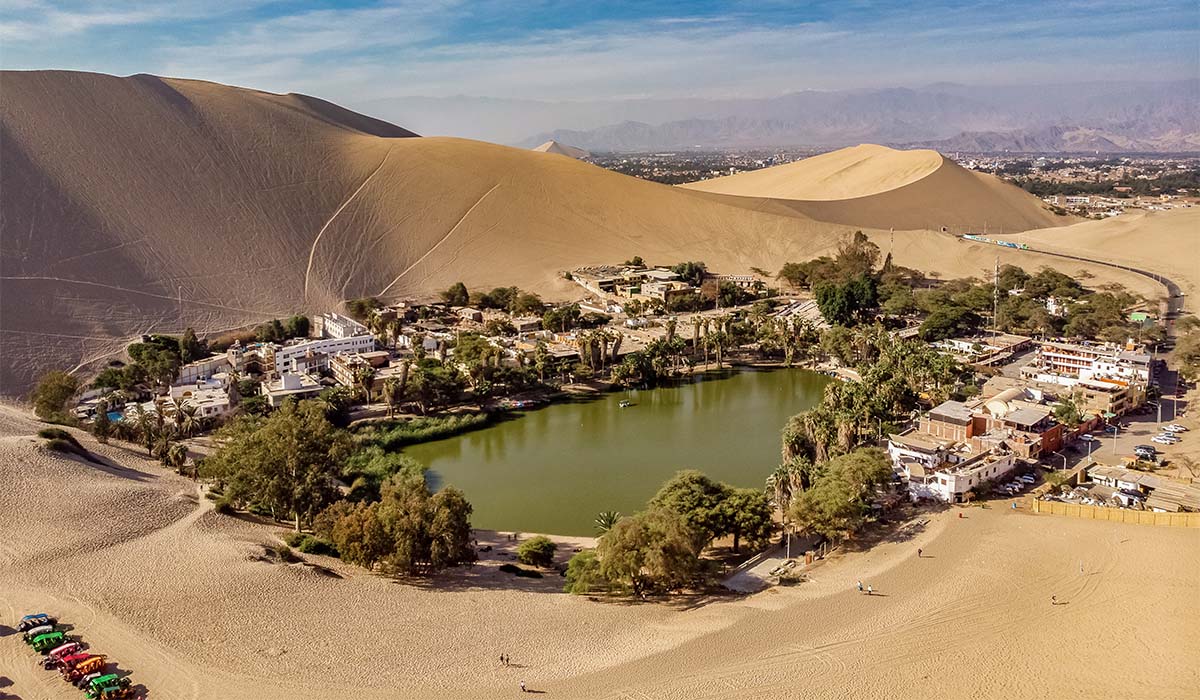
The oasis features a natural water lagoon enclosed by some of the largest sand dunes in South America. The immediate environment supports a specialized habitat of palm trees, native huarango (carob) trees, and migratory birds. Today, Huacachina is protected as a Regional Conservation Area to safeguard its fragile biodiversity.
What makes it worth visiting:
- Sand dune activities (sandboarding, dune buggy tours)
- Gateway to other Ica region attractions: Nazca Lines, Paracas National Reserve, pisco wineries
- Genuine desert landscape with functioning local ecosystem
- Mix of outdoor adventure and relaxation

History and Geology of the Huacachina Oasis
From a geological standpoint, the Huacachina oasis was formed by the upwelling of underground aquifers flowing from the Andes. This water source allowed a pocket of vegetation—primarily palms, eucalyptus, and deep-rooted huarango trees—to thrive in the middle of the Ica desert.
Guide's Note on Conservation: Due to recent climate changes, agricultural demands, and urban expansion in nearby Ica, the natural water levels have decreased over the years. Today, local authorities use a system of constant water pumping and strict environmental regulations to preserve the water mirror and protect the resident fish and bird populations.
The Rise of Modern Tourism
Historically, Huacachina reached its peak as a luxury health resort in the mid-20th century. During the 1960s, wealthy travelers flocked here for the purported healing properties of its mineral-rich waters. The town built up a surrounding concrete boardwalk, hotels, and spa services.
Today, the infrastructure remains, but the focus has shifted entirely toward adventure tourism, sand sports, and a lively evening social scene for international travelers.
The Legend of Huacachina
Local folklore tells that a young woman from Tacaraca wept for her beloved—an Inca warrior killed in battle. As she cried, her tears formed the lagoon. Frightened by a foreign warrior approaching, she threw herself into the water she had created.
When she emerged hours later, she had transformed into a mermaid. Her name was Huacachina (Quechua for "woman who cries").
Local people say that on full moon nights, the mermaid still surfaces to mourn her lost love.
How to Get to Huacachina
Because there are no commercial airports nearby, access to the Ica region is done strictly by land via the South Pan-American Highway. Travelers have two main logistical options:
Public Interprovincial Buses: You can take a standard long-distance bus from Lima to the central terminals in Ica. The drive takes between 4 and 5 hours depending on traffic leaving Lima. Once at the Ica station, you must take a local 15-minute taxi ride directly to the oasis lagoon.
Structured Tourist Services: For travelers on tighter schedules, daily tourist shuttle services run direct round-trips from Lima. These itineraries typically last 1 to 3 days and allow you to easily combine Huacachina with the Paracas National Reserve (ballestas islands) or the Nazca Lines.
What to Do in Huacachina
Beyond viewing the scenery, the geography around the oasis provides excellent opportunities for outdoor recreation:
Sandboarding
The most popular activity here. You climb the dunes and slide down on a board—up to 100 meters high.
What you should know:
- Instructors provide equipment and guidance
- You can sit, lie down, or stand on the board (standing requires confidence)
- If you're nervous, go with an instructor
- This genuinely tests your nerve
Dune Buggy Tours
High-speed rides through the dunes. Fast, loud, and physically demanding. Not for everyone, but popular with adrenaline seekers.
Boating on the Lagoon
Calm, relaxing experience. You'll see the oasis ecosystem up close: different tree species and local birds like the huaco heron (which has become more common in recent years).
Picnic in the Dunes
Bring your own food and drinks. Relax among the dunes with a simple meal. Bring a game or book if you want entertainment.
Sunset from the Dunes
Watch the sun drop over the dunes. The light changes quickly here—worth the effort to be in position by late afternoon.
Horseback Riding
A slower way to explore the landscape. Good if you want contact with nature without the adrenaline of dune buggies or sandboarding.
Nightlife
The town transforms after dark. Venues light up around the lagoon. There's a genuine party atmosphere if you're interested.